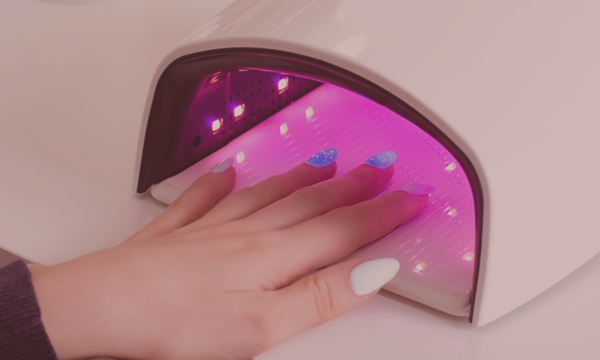
Cleaner, Nail Prep and Primer are often confused. Find out how they differ, what they do and the correct order in which to apply them before applying gel or semi-permanent nail varnish.
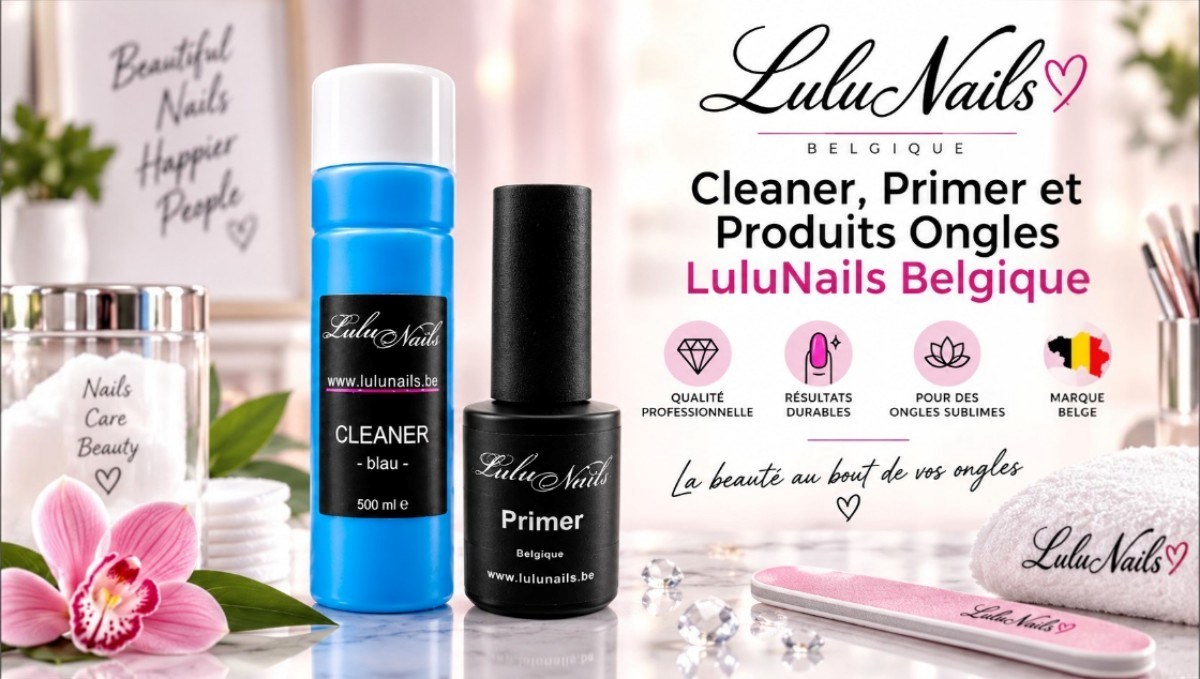
Cleaner, Nail Prep or Nail Primer: What’s the Difference and in What Order Should You Use Them? | LuluNails Belgium
Are you getting ready to apply semi-permanent, builder gel, Rubber Base or Acrygel but are unsure whether to use Cleaner, Nail Prep or Primer?
These three products are often grouped together under the same category of nail preparation, yet they do not serve exactly the same purpose.
Cleaner, Nail Prep or Primer: which one should you use? In what order? Does the primer need to be cured under the lamp? Should all three products be used for every manicure?
Proper preparation of the natural nail can make a huge differencethe quality and longevity of a manicure.
In this LuluNails Belgium guide, discover the role of each product and how to put together a clearerpreparation routine.
Cleaner, Nail Prep and Primer: the difference in a few seconds
Here’s the quick answer.
Cleaner
It is mainly used to clean and degrease the surface depending on the product and the procedure used.
Nail Prep
It is mainly used to temporarily dehydrate the natural nail plate and reduce moisture or oils before applying the products.
Primer
Its main purpose is to promote adhesion between the natural nail and the system applied afterwards.
So, to summarise:
Nail Prep = to dehydrate
They complement each other, but this does not automatically mean that every manicure requires all three.
Why is nail preparation important?
Before discussing the liquids, it is important to understand one key point:
a good product cannot always compensate for poor mechanical preparation.
Before applying your Base Coat, Rubber Base, Builder Gel or construction gel, you should generally check:
- the cuticles;
- any dead skin on the nail plate;
- the shape of the free edge;
- the natural shine of the nail plate when the procedure involves buffing it;
- dust;
- any oily residues.
Proper preparation helps to create a surface better suited to the application of the chosen system.
What is a nail cleaner?
The Nail Cleaner is a liquid used at various stages depending on its formulation and the application procedure.
In particular, it can be used to:
- clean the nail plate;
- remove fine dust;
- degreasing a surface;
- cleaning certain dispersion layers;
- preparing a surface before the next stage, where the procedure requires it.
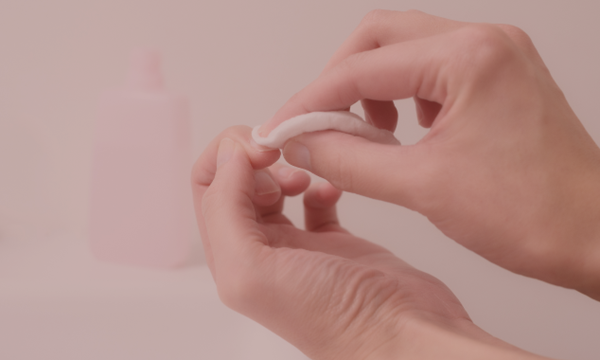
It is generally used with a lint-free cloth or cotton pad to prevent fibres from being left on the nail.
When should the Cleaner be used?
The Cleaner can be used at various stages.
Before application
After preparation and dust removal, it can be used to clean the surface in accordance with your protocol.
During gel application
It can êbe used when the system requires the removal of a dispersion layer prior to filing or finishing.
At the end of an application
Some products leave a sticky layer after polymerisation.
Where the manufacturer specifies that this layer should be removed, a suitable cleaner may be used.
Please note:
not all top coats need to be degreased.
A residue-free Top Coat does not usually require this step.
Cleaner and nail varnish remover: are they the same thing?
No.
This is a common misconception.
Cleaner is primarily intended for cleaning and degreasing, depending on its use.
The solvent or stripping agent is designed to remove certain products that are compatible with a dissolution process.
Cleaner and nail polish remover should therefore not be regarded as two names for the same product.
What is Nail Prep?
Nail Prep is a preparation product applied to thenatural nail before application.
Its main purpose is generally to temporarily dehydrate the surface.
The natural nail naturally contains moisture and lipids.
Depending on the type of nail and the system used, temporarily reducing this moisture can help to create a surface better suited to adhesion.
Nail Prep or dehydrator: are they the same thing?
Very often, yes.
You may come across different names:
- Nail Prep;
- Nail Dehydrator;
- Nail Dehydrator;
- Nail Dehydrator Prep.
The trade name may vary depending on the brand.
The most important thing is to check the function stated on the product.
How do you apply Nail Prep?
After preparing the nail correctly:
- carefully remove any dust;
- apply a small amount of Nail Prep to the natural nail;
- avoid saturating the nail plate;
- allow the product to take effect or dry according to the instructions;
- continue with the Primer if your system requires it.
Nail Prep is normally used on the natural nail, and not as a thick layer of product.
Does Nail Prep need to be cured under a UV/LED lamp?
Generally speaking, a Nail Prep-type dehydrator is not a UV/LED gel.
It should therefore not automatically be treated as a base coat.
However, always follow the exact instructions for the product you are using.
What is a Nail Primer?
The Nail Primer is a product used to enhance the adhesion of the system applied afterwards.
It acts as an intermediate step between preparing the natural nail and applying certain products.
Depending on the system, it may be used before:
- Base Coat;
- Rubber Base;
- Builder Gel ;
- builder gel ;
- Acrygel ;
- certain semi-permanent nail polish systems.
However, the primer does not automatically replace a base coat.
Acid-based primer or acid-free primer: what’s the difference?
There are different formulations.
Acid-free primer
Acid-free primer is widely used in modern nail care systems.
It promotes adhesion without functioning exactly like an acid primer.
It may be suitable for many common protocols.
Acid Primer
Acid primer belongs to a different family of products and should only be used when it is suitable for the system and the situation.
Its use requires greater care.
For each product, strictly follow the manufacturer’s instructions.
Is the LuluNails Primer acid-based or acid-free?
The LuluNails Professional Nail Primer in question is an acid-free primer.
It is applied to the natural nail before the Base Coat or Rubber Base, in accordance with the LuluNails protocol.
A very small amount is sufficient.
Does the primer need to be cured under the lamp?
An acid-free primer that cures in theair should not be confused with a UV/LED Base Coat.
After application, leave it to set or dry in accordance with the product’s instructions.
You then apply your next product.
Do not automatically place all liquids under the lamp simply because they are used in a UV/LED application.
In what order should Cleaner, Nail Prep and Primer be used?
For a standard preparation, the order may be:
1. Cuticle preparation
Gently push back the cuticles and remove any dead skin from the nail plate.
2. Shaping
File the free edge.
3. Lightly matting
Where your treatment protocol requires it, gently remove the natural shine without digging into the nail.
4. Dusting
Remove all dust.
5. Cleaner
Clean the nail plate if your protocol includes this step.
6. Nail Prep
Apply the dehydrator to the natural nail.
7. Primer
Apply a very small amount if the system or nail type requires it.
8. Base Coat or other adhesion system
Then apply the Base Coat, Rubber Base, Builder Gel or the recommended system.
So you can remember:
Preparation → Cleaner &→ Nail Prep → Primer → Base
However, this order is merely a general example.
The exact protocol for the product being used takes precedence.
Do you always have to use Cleaner, Nail Prep and Primer?
No.
This is important information.
Adding more products does not automatically mean better hold.
Some systems may require:
Nail Prep Primer
Others:
Nail Prep Base
Still others have their own adhesion protocol.
It is therefore preferable to follow aconsistent routine rather than piling on products for no reason.
Cleaner or Nail Prep: what’s the difference?
These two products are particularly often confused.
Cleaner
It mainly cleans or degreases the surface, depending on how it is used.
Nail Prep
It is specifically designed to temporarily dehydrate the natural nail.
A Cleaner should therefore not êautomatically be considered a Nail Prep.
And a Nail Prep does not necessarily replace the functions of a Cleaner.
Nail Prep or Primer: what’s the difference?
The difference is also significant.
Nail Prep
It mainly prepares the nail plate by temporarily reducing moisture and oils.
Primer
It mainly improves adhesion between the natural nail and the product applied afterwards.
They can therefore be used one after the other when the procedure calls for it.
Primer or Base Coat: what’s the difference?
Primer and base coat do not serve the same purpose.
Primer
It prepares the surface for adhesion.
It is usually applied in a very small amount to the natural nail.
Base Coat
This is a layer of UV/LED product that forms part of the application.
It is then cured under a compatible lamp.
You should therefore not automatically substitute:
Primer with Base Coat
or
Base Coat with Primer.
What is the procedure before applying a semi-permanent nail varnish?
For a standard semi-permanent application, the procedure might be as follows:
Preparation of the nail
Dusting
Cleaner / Nail Prep depending on the system
Primer if necessary
Base Coat
Top Coat
The colour must be applied in thin layers and cured under a compatible lamp.
What is the procedure before applying a Rubber Base?
For a Rubber Base, you may encounter a procedure such as:
Preparation
Cleaner / Nail Prep
Primer if necessary
Rubber Base
Colour if desired
Top Coat
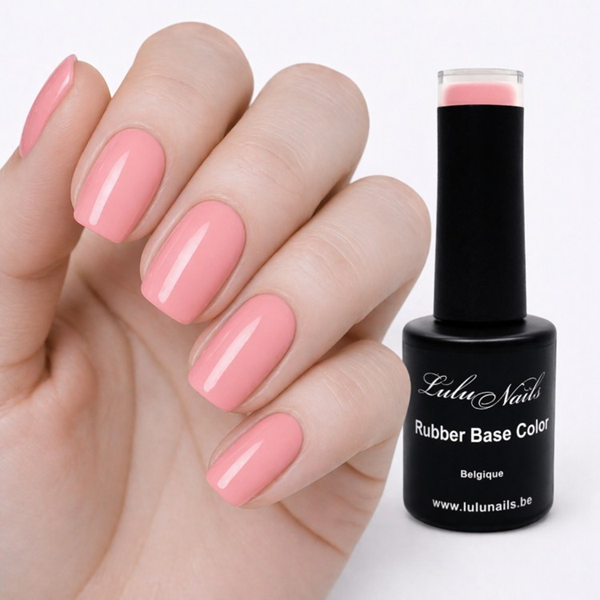
A Rubber Base Colour can also be used directly as a colour, depending on the desired result.
What is the procedure before applying a Builder Gel?
With a Builder Gel, the order can be:
Preparation
Nail Prep
Primer according to the system
Base Coat or bonding layer if necessary
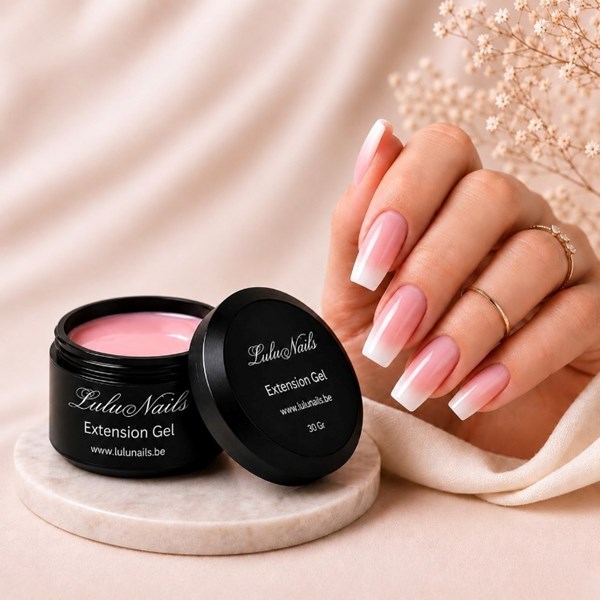
Builder Gel
Semi-permanent polish if desired
Some Builder Gels may follow a different protocol.
Always check the product information sheet.
What is the procedure before applying a builder gel?
For a gel application:
- prepare the natural nail correctly;
- remove any dust;
- use the recommended preparation products;
- apply your bonding system;
- build up the nail;
- cure;
- adjust the shape if necessary;
- apply the colour;
- finish with the top coat.
The liquid preparation is only one part of the application.
The structure remains essential.
What is the procedure before applying Acrygel / Polygel?
The principle remains similar:
Preparation of the nail plate → suitable bonding products → Base coat if notif necessary → Acrygel → finishing.
As Acrygel and Builder Gel do not necessarily have the samesystem, avoid assuming that all protocols are interchangeable.
Should Primer be used on all nails?
Not necessarily.
Primer can be particularly useful when a protocol calls for it or when a particular type of nail requires extra work to ensure adhesion.
However, using too much primer does not automatically result in a better application.
A very thin layer is usually sufficient.
The product must not run onto the skin.
Can using too much primer cause problems?
Yes, using too much does not necessarily provide any benefit.
Avoid:
- completely saturating thenail;
- allowing the product to run into the cuticles;
- applying several coats without following the instructions;
- dipping the brush too deeply.
The primer is a preparatory product.
More isn’t necessarily better.
Why is my gel peeling off despite using the Primer?
If your gel is peeling off, the primer isn’t necessarily to blame.
Possible causes include:
- cuticles still present on the nail plate;
- dust; include:
- cuticles still present on the nail plate;
- dust;
- the product coming into contact with the skin;
- poor application technique;
- gel applied too thickly near the cuticles;
- incorrect curing;
- incompatible lamp;
- inappropriate product combination;
- pre-existing delamination covered during a refill.
- poor cuticle preparation;
- a Base Coat applied incorrectly;
- coats that are too thick;
- colour that has come into contact with the skin;
- a poorly finished free edge;
- incorrect curing.
- natural oils;
- moisture;
- dust;
- residue.
- the nail plate still has cuticles on it;
- the gel touches the skin;
- the build-up is incorrect;
- curing is insufficient.
- preparation;
- cleaning;
- working with gel;
- finishing, depending on the system.
- semi-permanent nail polish;
- Rubber Base;
- Builder Gel;
- builder gel ;
- Acrygel / Polygel.
- files;
- buffers;
- cuticle pushers;
- dust brush;
- Base Coat;
- Rubber Base;
- Builder Gel;
- building gel;
- semi-permanent nail varnish;
- Top Coat;
- UV/LED lamp ;
- lint-free squares.
- Cleaner;
- Acid-free primer;
- Base Coat;
- Rubber Base;
- Builder Gel;
- building gel;
- semi-permanent polish;
- Top Coat;
- UV/LED lamps;
- nail care accessories.
It is therefore necessary to analyse the entire application.
Why is my semi-permanent nail varnish peeling off despite using Nail Prep?
Same principle.
Nail Prep cannot compensate for:
Preparation liquids enhance a correctly executed procedure.
They are no substitute for technique.
Can you touch the nail after using Nail Prep?
It is best to avoid doing so.
After preparing and degreasing the nail plate, touching the nail with your fingers can reintroduce:
Once the preparation is complete, continue directly with your treatment.
Should you use cuticle oil before the primer?
Generally, avoid applying an oily product just before application if your procedure does not include its complete removal afterwards.
Cuticle oil is particularly useful at the end of a manicure.
It helps to nourish and beautify the area around the nails without disrupting the initial preparation.
Mistake No. 1: confusing Cleaner with Primer
Cleaner does not automatically replace Primer.
The former is primarily used for cleaning and degreasing, in accordance with the protocol.
The latter is primarily used to promote adhesion.
Mistake No. 2: using far too much Primer
A thin application is usually sufficient.
The aim is not to create a thick layer as with a gel.
Mistake no.3: Curing the primer as if it were a base coat
Not all preparation products cure under a lamp.
An air-drying primer must follow its own protocol.
Mistake No. 4: automatically degreasing all coats
Some tacky coats are normal and can help the next step to adhere.
Therefore, do not systematically remove every dispersion layer.
Error no.5: using a Cleaner instead of nail varnish remover
Cleaner and nail varnish remover serve different purposes.
Use a suitable removal product when you wish to remove a semi-permanent polish compatible with this technique.
Mistake No. 6: thinking that the Primer replaces proper preparation
Even the best primer cannot guarantee good hold if:
Technique remains the top priority.
Table: Cleaner, Nail Prep, Primer and Base Coat
| Product | Main function | When to use |
|---|---|---|
| Cleaner | Clean / degrease in accordance with the protocol | Preparation or finishing, depending on the product |
| Nail Prep | ToTemporarily dehydrate the natural nail | Before the Primer or Base Coat |
| Primer | Enhance adhesion | Before the Base Coat or the specified system |
| Base Coat | Create the UV/LED base layer | Before the colour or as per the system |
| Top Coat | Protect and finish the application | Final step |
Which product should you choose for naturally oily nails?
Nails that produce more sebum or have a difficult surface may require particularly thorough preparation.
A treatment protocol including:
Nail Prep Suitable primer
may be worth considering where the system allows for it.
But always start with proper mechanical preparation.
Which product should you choose for thin nails?
On thin nails, avoid aggressive filing at all costs.
Chemical preparation must not be used as an excuse to cause further damage to the nail plate.
Workgently and use only the products required for the chosen system.
Which product should be used for a gel refill?
When performing a refill, the preparation products must, above all, be applied to the new area of the natural nail in accordance with your protocol.
It is g&generally not necessary to soak the entire old build with Primer.
After removing any lifting and;regrowth:
Nail Prep → Primer if necessary → bonding system → new Builder Gel.
Professional nail cleaner: small or large size?
For occasional use at home, a small size may be practical.
For a nail technician who works daily, a larger size provides more product for:
Above all, choose the size that suits your frequency ofuse.
Acid-free primer: for which techniques?
Depending on its compatibility, an acid-free primer canbe incorporated into various techniques:
The product applied next must always be compatible with the chosen protocol.
Preparation products for professional nail care
To create a fully equipped workstation, liquid products can be combined with:
They form part of a complete system and must not bebe considered in isolation.
Cleaner, Primer and Nail Products from LuluNails Belgium
LuluNails offers solutions designed for thepreparation and application of professional nail extensions.
You can complete your routine with:
The aim is to establish a consistent protocol from nail preparation right through to the finish.
FAQ – Cleaner, Nail Prep and Nail Primer
What is the difference between Cleaner and Nail Prep?
Cleaner is mainly used to clean or degrease, depending on the product, whilst Nail Prep is specifically designed to temporarily dehydrate the natural nail plate.
What is the difference between Nail Prep and Primer?
Nail Prep temporarily reducesmoisture and oils, whilst Primer primarily promotes the adhesion of the product applied afterwards.
In what order should Nail Prep and Primer be used?
Nail Prep is generally applied before the Primer.
Does the Cleaner go under the lamp?
A standard Cleaner isnot a UV/LED product that requires curing. However, always follow the instructions for use.
Does the Primer go under the lamp?
An acid-free Primer thatair-drying does not require curing. Always check the product instructions.
Does the Primer replace the Base Coat?
No. They serve different purposes.
Can you apply semi-permanent polish without a primer?
It depends on the system, the Base Coat and the type of nail. Not all protocols necessarily require a Primer.
Do you need to use Nail Prep with every application?
It depends on the protocol used. Follow the recommendations for the products in your systemsystem.
Can Cleaner be used after a Top Coat?
Yes, when the top coat has a dispersion layer that needs to be removed. A residue-free top coat generally does not need to ébe degreased.
Why do you need to use a lint-free cloth?
It prevents fibres from being left on the surface beforeprepared surface or on the finish.
Can you apply a lot of primer to improve adhesion?
No. Applying too much does not automatically improve adhesion. A very thin layer is géusually sufficient.
Why is my nail art peeling off even when I use primer?
Cuticle preparation, dust, contact with the skin, the design and the curing process can also cause lifting.
Which primer should I choose for my nails?
Choose a primer that is compatible with the system you are using. LuluNails offers, amongst other products, a professional acid-free primer for preparing the nails.
What is the purpose of the cleaner after a gel application?
Depending on the system, it can be used to remove a dispersion layer before filing or during the finishing stage.
Are Cleaner and nail varnish remover the same thing?
No. Cleaner is a cleaning/degreasing product, whilst nail polish remover is designed to remove compatible products.
Cleaner, Nail Prep or Primer: what do you need to know?
To avoid confusing them, simply remember:
Cleaner → to clean
Nail Prep → dehydrate
Primer → promote adhesion
Base Coat → create the base for the application
Next, always adapt the procedure to the product and the natural nail.
Successful preparation relies on three elements:
a properly prepared nail plate;
suitable products applied in small quantities;
a procedure followed from start to finish.
Discover LuluNails’ professional products to prepare your semi-permanent nail polish applications, Rubber Base, Builder Gel, and Acrygel.
LuluNails – Professional nail products, a Belgian brand based in Liège with an online shop.