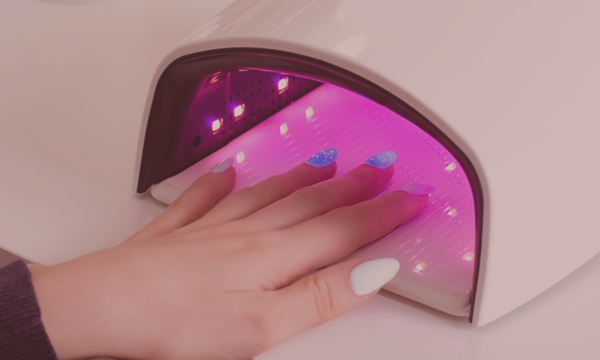
Which base coat should you choose before applying semi-permanent nail polish? Compare Base Coat, Rubber Base and Builder Gel to suit your nails and your technique with LuluNails Belgium.
Which Base Coat Should You Choose for Semi-Permanent Nail Polish? Base Coat, Rubber Base or Builder Gel | LuluNails Belgium
Would you like to apply semi-permanent nail polish but aren’t sure which base coat to use before applying the colour?
Base Coat, Rubber Base or Builder Gel?
All three products can be used before applying semi-permanent nail polish, but they do not serve exactly the same purpose.
The right choice depends mainly on your natural nails:
- strong;
- thin;
- soft;
- uneven;
- short;
- long;
- whether or not they require strengthening.
In this guide, LuluNails Belgium explains in simple terms which base coat to choose for your semi-permanent nail polish to ensure the application is suited to your nails and the result you’re aiming for.
What is the purpose of a base coat under semi-permanent nail varnish?
Colour is only one part ofa semi-permanent manicure.
Before applying the polish, you need to create a suitable base.
Depending on the product used, this layer can, in particular, serve to:
- improve adhesion;
- create an even surface;
- support the natural nail;
- slightly strengthen the nail;
- create a protective layer;
- prepare the surface before applying colour.
This is why not all clients necessarily require the sameproduct under their nail varnish.
Which base coat should you use under semi-permanent nail varnish?
The quick answer:
Strong natural nails
Base Coat
Thin or flexible natural nails
Rubber Base, depending on the type of nail and the chosen procedure.
Nails requiring further strengthening
Flexible Builder Gel / Builder Gel
Long nails or those requiring substantial building
Suitable builder gel
The choice should therefore not depend solely on which product is currently in fashion.
Above all, it must be suited to the type of nail.
1. Base Coat: for a classic semi-permanent application
The Base Coat is the classic solution before applying a semi-permanent nail varnish.
It is applied in a thin layer to a properly prepared nail.
It creates a layer ofadhesion between the natural nail and the colour.
It is particularly suitable when:
- the nails are naturally strong;
- the nails are kept short;
- no significant strengthening is required;
- you are looking for a classic semi-permanent application.
The procedure can then be as follows:
Preparation → Base Coat → Colour → Top Coat
This is the simplest method.
When should you choose a base coat?
Choose a base coat when your natural nails are in good condition and you mainly want to add colour.
For example:
You have short nails, they don’t bend easily, and you simply want to wear a lovely red, nude, milky or burgundy colour for several weeks.
No extensive nail extension is required.
A suitable base coat may be sufficient.
2. Rubber Base: to slightly strengthen the natural nail
The Rubber Base is generally thicker and more flexible than a standard base coat.
It can provide light reinforcement whilst preserving the natural nail.
It is particularly suitable for certain types of nails:
- thin;
- flexible;
- slightly uneven;
- requiring extra support;
- kept short or of moderate length.
Rubber Base also helps to create a slight curve.
It can therefore be used when the standard Base Coat does not sufficiently meet the nail’s needs.
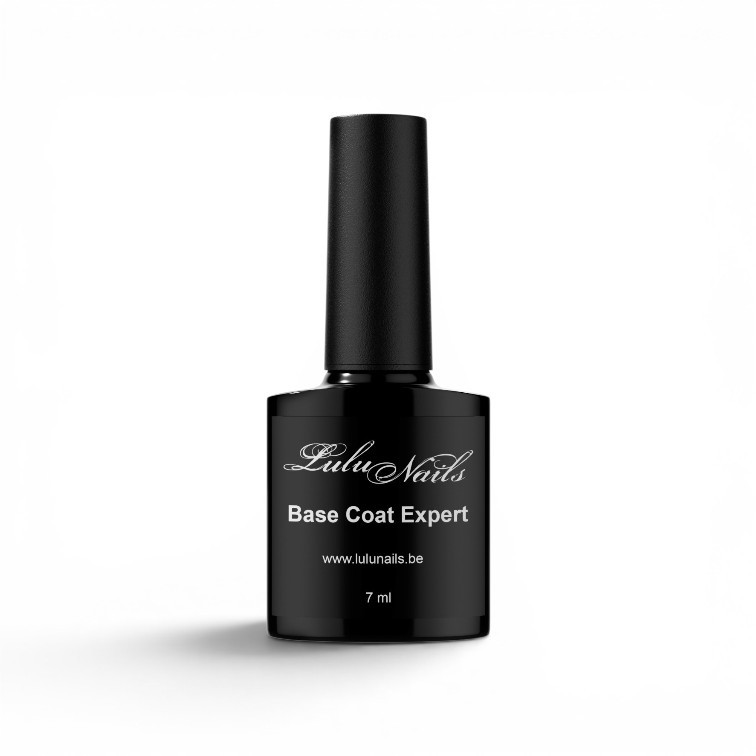
What is the difference between Base Coat and Rubber Base?
This is a very common question.
Base Coat
It is mainly used as a bonding coat before the colour.
It is usually applied in a thin layer.
Rubber Base
It has more body and flexibility.
It can be used to:
- providing light reinforcement;
- levelling the surface;
- correcting minor irregularities;
- creating a light coating.
Rubber Base therefore falls between a traditional base and a more structuring build-up product.
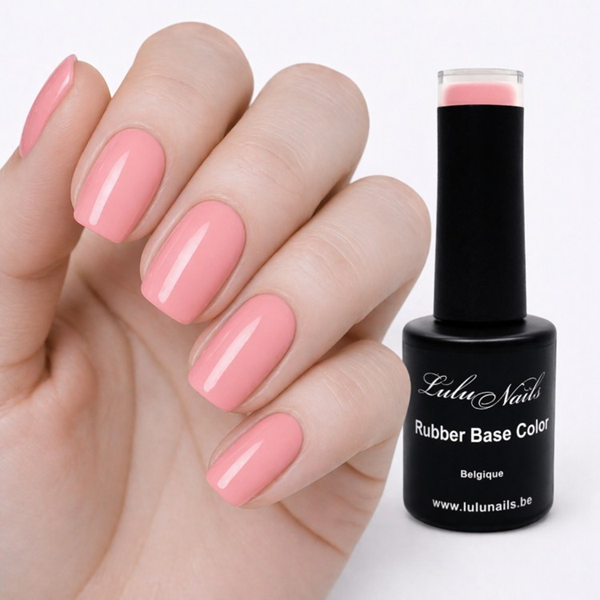
3. Rubber Base Colour: primer and colour in a single product
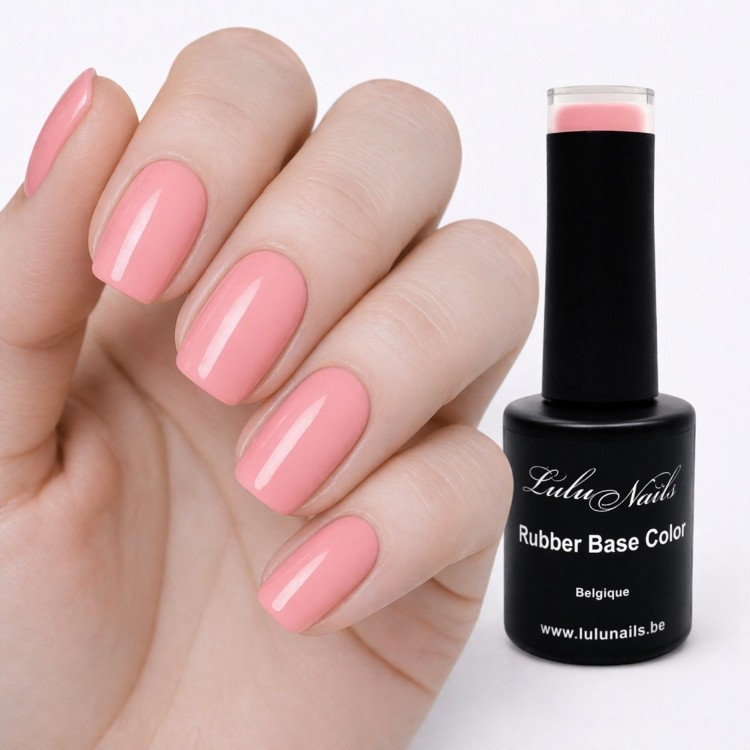
A Rubber Base Colour adds an extra function: colour.
It allows you to achieve a tinted base straight away.
The natural colours are particularly interesting:
- nude;
- pink;
- Milky;
- beige;
- natural colours.
A Rubber Base Colour can be worn with just a Top Coat if you like the result.
You can also add:
- a French manicure;
- nail art;
- another compatible colour.
For natural manicures, this is a particularly practical solution.
4. Builder Gel: for added structure
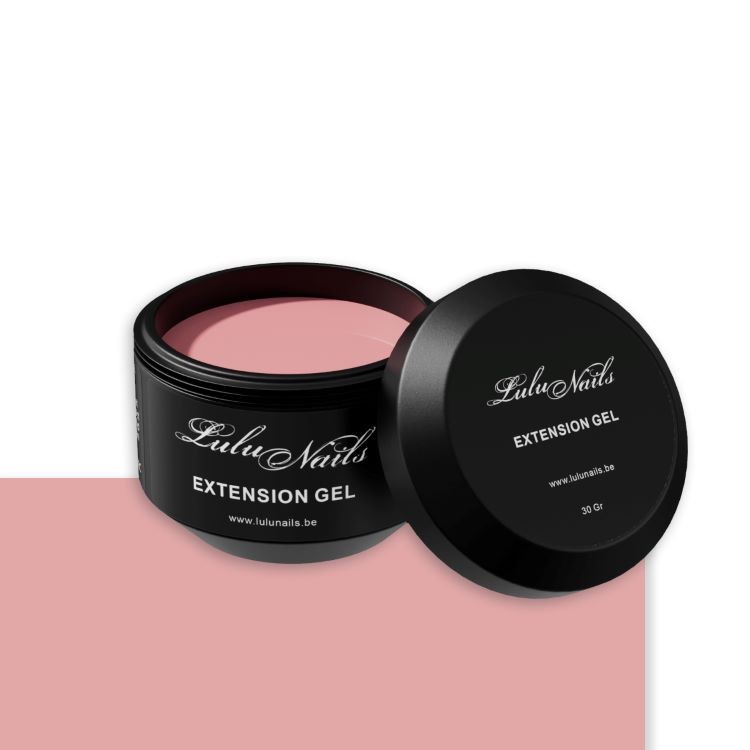
When the nail needs more than just a light strengthening, you can switch to Builder Gel.
Builder Gel literally means ‘building gel’.
It provides more structure than a standard Base Coat.
Depending on the Builder Gel used, it can be used to :
- build up the nail;
- strengthen the natural nail;
- create an apex;
- slightly correct the nail shape;
- support the growth of natural nails;
- create small extensions.
The procedure may then be as follows:
Preparation → Suitable base coat → Builder Gel → Semi-permanent colour → Top Coat
What is the difference between Rubber Base and Builder Gel?
The main difference lies in the level of build-up required.
Rubber Base
More suitable for light, flexible reinforcement.
Builder Gel
Allows you to create more structure and work more precisely on the nail’s shape.
Imagine three layers:
Base Coat → Rubber Base → Builder Gel
Generally speaking, the further you progress, the greater the build-up capacity becomes.
But that doesn’t mean that Builder Gel is automatically better.
The best product is the one that suits the nail and the technique.
5. Flexible Builder Gel in a bottle: handy for building up the nail
The Flexible Builder Gel in a bottle combines the building function with a practical format featuring an integrated brush.
It is particularly useful for:
- building up the nails;
- strengthening natural nails;
- short applications;
- moderate lengths;
- creating a slight apex.
It is applied more like a product from a bottle than a traditional builder gel from a pot.
At LuluNails, you can find Flexible Builder Gels in several natural finishes to create a base coat before applying your semi-permanent polish.
Which base coat is best for soft nails?
Soft nails bend more easily when pressure is applied.
A single coat of colour does not necessarily provide the support they need.
Depending on their condition and length, a flexible Rubber Base may be a worthwhile solution.
For added structure, a suitable Flexible Builder Gel may also be considered.
The important thing is to avoid choosing a product simply because it is “harder”.
The base coat must work well with the nature of the nail.
Which base coat for thin nails?
For thin nails, preparation must be particularly gentle.
Avoid filing the natural nail plate too aggressively.
Depending on the condition of the nail, you might consider:
- a Base Coat for a classic application;
- a Rubber Base to provide extra support;
- a Flexible Builder Gel when more structure is required.
The aim is not to create an extremely thick layer.
A good structure is better than an excessive build-up of product.
Which base coat for brittle nails?
You shouldfirst try to understand why the nail breaks.
If the nail is simply thin or flexible, a suitable strengthening treatment can help create a more resilient structure whilst the nails are being worn.
A Rubber Base or Builder Gel may be considered depending on:
- length;
- flexibility;
- the condition of the nail plate;
- the type of application.
However, a cosmetic product does not treat a nail condition.
If the nail shows any abnormality, pain or an unusual problem, it is best not to cover the area until the cause is known.
What base coat should you use for short nails?
On short, strong natural nails, a base coat may be all you need.
You can then apply:
- nude ;
- Milky ;
- red;
- burgundy;
- chocolate;
- pink;
- seasonal colours.
Whilst short nails are very flexible, a Rubber Base can provide additional structure.
Short extensions are also particularly well-suited to natural manicures.
Which base coat should you use to let your natural nails grow?
Would you like to keep your own nails whilst letting them grow gradually?
coating may be worth considering.
A Rubber Base may be suitable for light strengthening.
A Flexible Builder Gel allows you to work more on the apex and structure.
As the nail gets longer, the structure becomes increasingly important.
The product chosen at the outset may therefore need to be adapted as the nails grow longer.
Which base coat for uneven nails?
A nail plate with minor irregularities can make the application of colour less evenuneven.
A self-levelling Rubber Base can help create a visually smoother surface.
For corrections requiring more product, a Builder Gel may be more suitable.
Before applying colour, always examine the nail:
- from the front;
- from the side;
- from above.
The surface must be smooth before applying semi-permanent polish.
Which base coat should you use for a French manicure?
There are several options for a natural French manicure.
Nude base coat
For a classic French manicure on strong nails.
Rubber Base Nude or Milky
To achieve a natural, slightly reinforced base straight away.
Nude or Milky Builder Gel
To create both structure and a beautiful base colour at the same time.
Shades:
- Nude Pink;
- Milky;
- beige;
- Cover;
- natural pink
are particularly suitable for the French manicure.
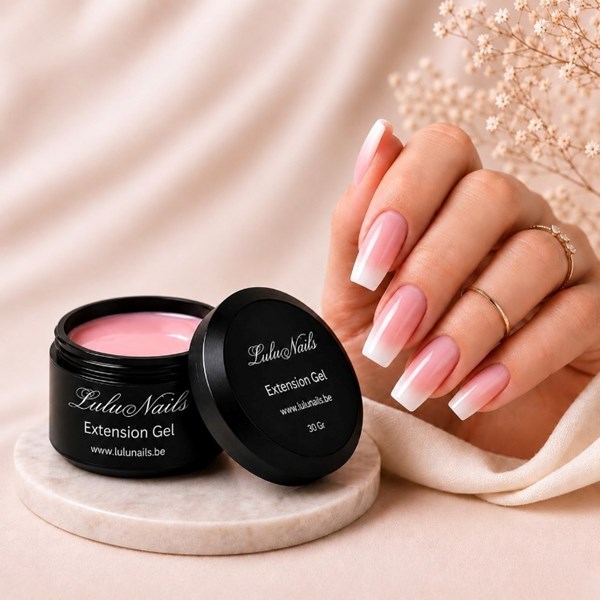
Which base coat for a Baby Boomer?
The Baby Boomer requires a smooth transition between a natural base and a lighter tip.
A Nude, Milky or Rosé Rubber Base can make an excellent base.
For a more structured build, use a Nude or Pink Builder Gel depending on your technique.
The choice depends mainly on the length and thedesired design.
Which base should you use under a dark semi-permanent nail varnish?
The choice of base coat does not depend directly on the colour.
Red, burgundy, black, midnight blue or chocolate can bebe applied to various compatible systems.
What determines the choice of base coat is mainly the condition of thenail.
For example:
Strong nail
Base Coat Burgundy Top Coat
Flexible nail
Rubber Base Bordeaux Top Coat
Nail requiring reinforcement
Builder Gel Bordeaux Top Coat
The same colour can therefore be used on three different types of nail preparation.
Can a Rubber Base be applied under semi-permanent nail varnish?
Yes, provided it is compatible with the products being used.
The Rubber Base can then be used as a strengthening layer before the colour.
The general procedure is as follows:
Preparation → Rubber Base → Semi-Permanent Polish → Top Coat
Always follow the specific instructions for the products used.
Can Builder Gel be applied under a semi-permanent nail varnish?
Yes.
It is even a common technique whenyou want to combine structure and colour.
Builder Gel is used to strengthen or build up the nails.
Semi-permanent nail varnish is then mainly used to add colour.
The principle is:
Building → surface preparation → colour → Top Coat
The surface must be properly prepared according to the system used before the colour is applied.
Do you always need to apply a Base Coat under the Builder Gel?
It depends on the system.
Some Builder Gels do notrequire a base coat or a specific bonding layer.
Other systems may work differently.
You should therefore not automatically apply thesame method to all gels.
Always follow the protocol specified for the product being used.
Base Coat or Primer: are they the same thing?
No.
They serve different purposes.
Primer
It is used during preparation and can improve adhesion when the protocol requires it.
Base Coat
This is a UV/LED coat applied before colour or certain building products.
A Primer does not, therefore, automatically replace a Base Coat.
Nor does a Base Coat necessarily replace all preparation products.
Nail Prep, Primer and Base Coat: in what order?
Depending on the protocol used, the order may be:
Mechanical preparation → Nail Prep → Primer if necessary → Base Coat
Then:
Semi-permanent polish → Top Coat
For strengthening:
Preparation → preparation products → suitable base → Rubber Base or Builder Gel → colour → Top Coat
Always follow the recommendations for your chosen system.
Why is my semi-permanent nail polish peeling off despite using a good base coat?
A good base coat cannot compensate for all preparation errors.
Peeling can be caused by, amongst other things:
- cuticles remaining on the nail plate;
- dust;
- product coming into contact with the skin;
- layers that are too thick;
- poor preparation;
- unsuitable base coat;
- incorrect polymerisation;
- incompatible lamp;
- poor structure.
It is therefore necessary to consider the entire protocol.
Mistake no. 1: choosing a base coat solely on the basis of price
Two base coats can have very different functions.
Before buying, ask yourself:
What type of nails do I have?
and
What do I want to achieve?
A base coat intended for a classic manicure does not serve the same purpose as a builder gel designed to createan apex.
Mistake No. 2: applying too much product
Thicker does not automatically mean more durable.
An excessive layer can:
- create a heavy application;
- seep into the cuticles;
- disrupt the structure;
- complicate the curing process.
Apply the amount appropriate for the product and technique.
Mistake no. 3: touching the cuticles
The Base Coat, Rubber Base, Builder Gel and uncured semi-permanent polish must not be left on the skin.
Work neatly.
If a product spills over, remove it before curing.
Mistake No. 4: mixing products without checking their compatibility
It is tempting to mix several systems.
However, not all combinations necessarily work in the same way.
Where possible, work with a consistent system and check the recommendations for the products you are using.
Which LuluNails base coat should you choose?
LuluNails offers several options depending on the type of application you require.
LuluNails Base Coat
For a classic semi-permanent manicure and to create a bonding layer before applying colour.
LuluNails Rubber Base
To provide light reinforcement for certain natural nails and achieve greater structure than with a standard Base Coat.
LuluNails Rubber Base Colour
To combine light strengthening with a natural colour.
LuluNails Flexible Builder Gel
For overlays and reinforcements requiring more build-up.
LuluNails Builder Gel
For designs and techniques requiring greater structure.
This allows the product to be tailored to the specific job, rather than systematically using the same base for all clients.
Base, Rubber Base and Builder Gel free from HEMA and TPO
The relevant LuluNails ranges are formulated without HEMA or TPO.
However, this does not mean that a UV/LED product is entirely free from the risk of a reaction.
To work correctly:
- avoid any contact between the uncured product and the skin;
- remove any excess product before curing;
- observe the curing times;
- use a compatible lamp;
- follow the instructions for use.
Clean application remains essential.
Where can you buy a Base Coat for Semi-Permanent Nail Polish in Belgium?
LuluNails is a Belgian brand specialisingspecialising in professional nail products.
You can find the following online:
- Base Coat;
- Rubber Base;
- Rubber Base Colour;
- Flexible Builder Gel;
- Builder Gel;
- Semi-Permanent Nail Varnishes;
- Top Coat;
- UV/LED lamps;
- nail files;
- brushes;
- sanders and accessories.
LuluNails also offers its products and services in the Liège area.
Table: which base coat should you choose for your semi-permanent nail polish?
| Nail type / requirement | Product to consider |
|---|---|
| Short, strong nails | Base Coat |
| Flexible natural nails | Rubber Base |
| Slightly uneven nails | Rubber Base |
| Quick nude manicure | Rubber Base Colour |
| Coating | Flexible Builder Gel |
| More structure | Builder Gel |
| Long nails | Builder Gel |
| Natural French manicure | Nude / Milky Rubber Base or Builder Gel |
| Baby Boomer | Nude/Milky Rubber Base or Builder Gel |
| Colour on a builder gel base | Builder Gel Semi-Permanent Polish |
This table is for guidance only: the actual condition of the nail and the product’s application protocol must always be taken into account.
FAQ – Base Coat, Rubber Base or Builder Gel?
Which base coat should be applied before a semi-permanent polish?
On strong natural nails, a suitable Base Coat may be sufficient. For softer nails or those requiring reinforcement, a Rubber Base or Builder Gel may be considered.
What is the difference between a Base Coat and a Rubber Base?
The Base Coat is mainly used to ensure adhesion before applying the colour. Rubber Base has a thicker consistency and can provide light strengthening.
What is the difference between Rubber Base and Builder Gel?
Rubber Base is generally more flexible and suitable for light strengthening. Builder Gel allows you to createmore structure and to shape the apex.
Which base should you choose for soft nails?
A flexible Rubber Base may be suitable for some soft nails. However, the choice depends on their condition, length and the system used.
Which base coat should you choose for brittle nails?
Depending on your needs, a Rubber Base or a Flexible Builder Gel may offer more support than a standard base coat.
Can semi-permanent nail varnish be applied directly onto a Builder Gel?
Yes, provided the Builder Gel has been properly cured and its surface has been prepared in accordance with the system’s protocol.
Can you apply semi-permanent nail varnish over a Rubber Base?
Yes. A compatible Rubber Base can be used as a reinforcement before applying the semi-permanent colour.
Does a Rubber Base Colour require semi-permanent polish?
Not necessarily. If you are happy with the colour of the Rubber Base, it can itselfthe colour of the manicure in its own right before the appropriate finish is applied.
Is a Base Coat required before applying a Rubber Base?
It depends on the product. Some Rubber Bases possesshave their own adhesion properties, whilst other systems follow a different protocol. Follow the manufacturer’s instructions.
Do you need a Base Coat before applying a Builder Gel?
This also depends on the Builder Gel used. Some systems require a Base Coat, whilstothers use a different bonding method.
Which base coat should I use for a French manicure?
A nude, natural pink or milky base coat is particularly suitable. This can be a Rubber Base Colour or a Builder Gel, depending on the level of strengthening required.
Which base coat should be used to make semi-permanent gel last longer?
The best base coat is one that is suited to the natural nail and compatible with the rest of the system. Preparation, curing and application also play a vital role.
Base Coat, Rubber Base or Builder Gel: which to choose?
Remember this simple rule:
Base Coat = adhesion and standard application.
Rubber Base = light, flexible reinforcement.
Builder Gel = greater structure and support.
Always start by examining the nail before choosing your product.
You can then apply your favourite colour from the LuluNails Semi-Permanent Nail Polishes and finish with your Top Coat.
Discover at LuluNails Belgium the Base Coats, Rubber Bases, Flexible Builder Gels, builder gels and semi-permanent polishes you need to tailor each application to the needs of your nails.
LuluNails – Professional nail products in Belgium and Liège.