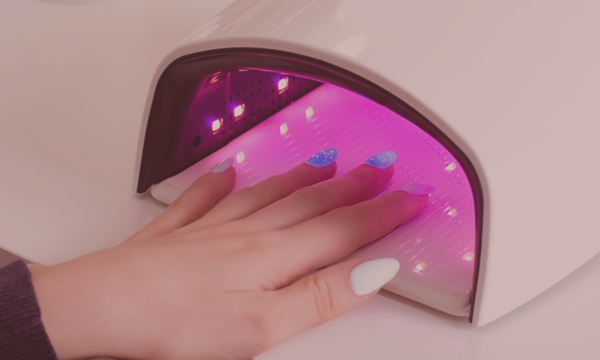
Can you use a base coat from one brand, a semi-permanent nail varnish from another, and a different top coat? Find out about compatibility, precautions and mistakes to avoid with LuluNails Belgium.
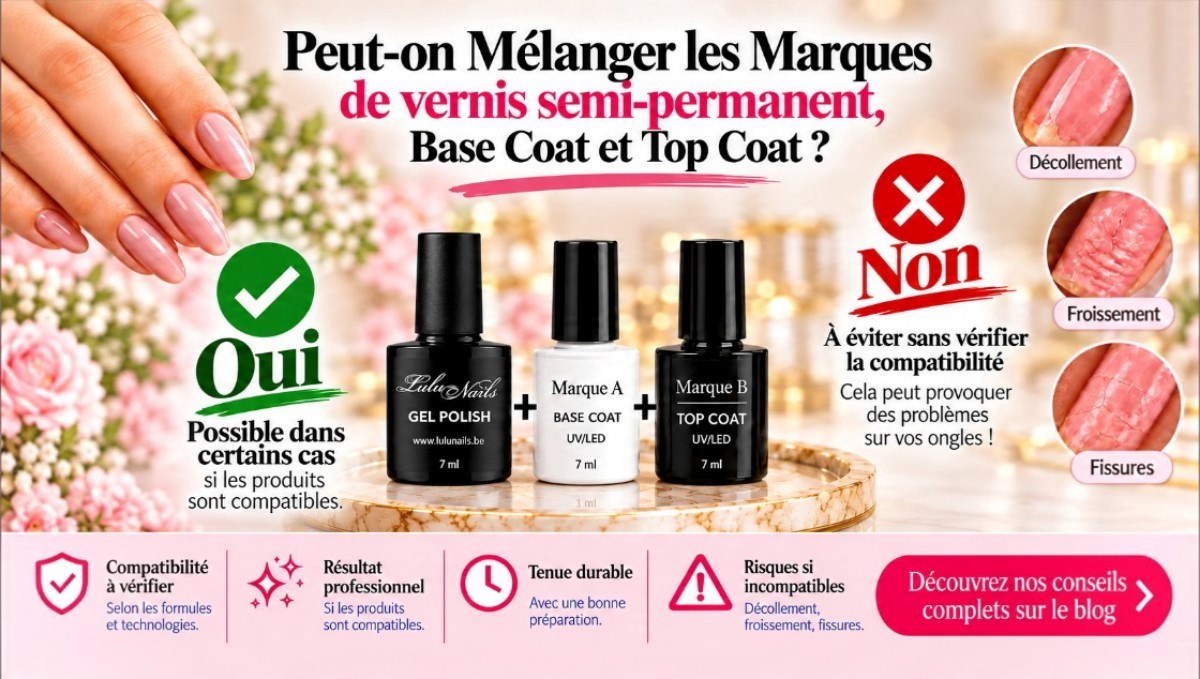
Can you mix different brands of nail products?
Do you have a base coat from one brand, a colour from another and a different top coat?
Are you wondering:
Can you mix different brands of semi-permanent nail polish?
Can you apply LuluNails polish over a base coat from another brand?
Can you use a top coat in a different colour?
Do builder gel and semi-permanent nail polish have to be from the same brand?
These are very common questions when you start building your collection of nail care products.
Theshort answer is:
some products from different brands may sometimes work together, but their compatibility and performance cannot be taken for granted.
A UV/LED application works as a complete system:
preparation → adhesion → base coat → any structure → colour → finish → polymerisation.
Changing a single element can alter the final result.
Why Do Nail Products Work As a System?
A semi-permanent nail polish is not simply nail varnish.
Each product has its own formulation and its own role.
Base Coat
In particular, it helps to create the interface between theand the products applied afterwards.
Rubber Base
It generally offers more body and flexibility than a standard base coat.
Builder Gel
It helps to create greater strength and structure.
Semi-Permanent Nail Polish
It is primarily used to add colour.
Top Coat
It protects the nails and provides the final finish.
UV/LED Lamp
It enables the polymerisation of compatible light-curing products.
These components must work together correctly.
This is why two products that look similar are not necessarily formulated in the same way.
Can you use a base coat from one brand and a top coat from another?
It can sometimes work, but it’s not something you should take for granted.
The base coat particularly affects:
-
adhesion;
-
the flexibility of the application;
-
the surface onto which the colour will be applied;
-
the overall performance of the system.
The semi-permanent top coat applied on top also has its own formulation.
If you mix two systems, pay particular attention to:
-
adhesion;
-
polymerisation;
-
flexibility;
-
delamination;
-
shrinkage;
-
colour appearance.
To achieve the most predictable protocol possible, it is generally simpler touse products designed and tested as a coherent system.
Can LuluNails Semi-Permanent Polish be applied over another base coat?
Before combining products from different systems, check their respective instructions.
The fact that they are both called:
Base Coat
or
Gel Polish
is not enough to guarantee that they will behave exactly the same way when used together.
For a consistent LuluNails application, you can follow a protocol using the appropriate LuluNails products for each stage:
Preparation → Suitable LuluNails Base Coat → LuluNails Semi-Permanent Polish → Compatible LuluNails Top Coat.
This approach also simplifies diagnosis should a problem arise.
Why can using the same product range make the job easier?
Imagine that a manicure starts to peel off after a few days.
You used:
Base coat – brand A
Colour – brand B
Top coat – Brand C
Curing lamp → Brand D
It then becomes much more difficult to determine which element is causing the problem.
By working with a consistent system, you reduce the number of variables.
You can analyse the following more easily:
-
preparation;
-
Base Coat;
-
amount of product;
-
curing;
-
colour application;
-
top coat;
-
condition of the natural nail.
For a professional, this consistency can be particularly useful.
Can you use a top coat from another brand?
The top coat is the final layer of the manicure.
Its role is, in particular, to protect the colour and create the desired finish.
Depending on the product, it can provide:
-
high gloss;
-
a natural finish;
-
a matt effect;
-
protection against scratches;
-
a residue-free finish.
A top coat from another brand may sometimes appear to work perfectly.
But it is important to check:
-
its compatibility with the underlying layer;
-
its curing time;
-
the recommended lamp;
-
its application protocol.
An unsuitable combination may eventually result in:
-
loss of shine;
-
an uneven surface;
-
lifting;
-
cracks;
-
poor curing.
Can the Base Coat and Top Coat be from different brands?
Technically, they are two different products that do not come into direct contact during every application, as the colour is usually applied between the two.
However, they both contribute to the overall performance of the manicure.
The most important thing, therefore, is not to consider each bottle in isolation.
You need to think of it as:
a complete system.
If you are looking for maximum predictability, use products where the manufacturer clearly states the protocol.
Can Builder Gel and Semi-Permanent Nail Polish from Different Brands bemix Builder Gel with semi-permanent nail varnish from different brands?
Builder Gel is mainly used to create reinforcement or structure.
The semi-permanent colour can then be applied to a properly prepared surface providedit is compatible with this type of base.
But again:
UV/LED-compatible does not automatically mean compatible with absolutely all existing UV/LED products.
Always check the instructions for the Builder Gel and your chosen polish.
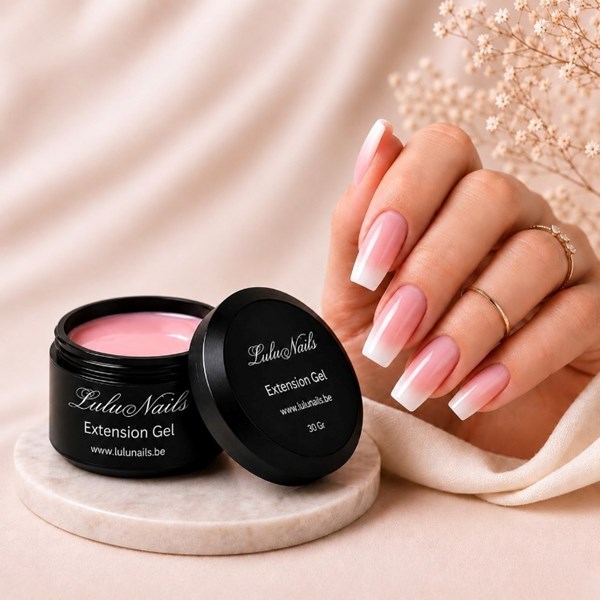
At LuluNails, the Flexible Builder Gel can be combined with LuluNails colours according to the relevant protocol to create:
-
coating;
-
Nude base;
-
Milky base;
-
coloured nails;
-
French manicure;
-
Nail Art.
Can semi-permanent nail varnish be applied over a Rubber Base?
Yes, provided the Rubber Base and the nail varnish used are compatible.
Rubber Base can be used to slightly strengthen certain natural nails and to create an even surface before applying colour.
A typical procedure might look like this:
Preparation → Rubber Base → Semi-Permanent Nail Polish → Top Coat
as per the instructions for the products used.
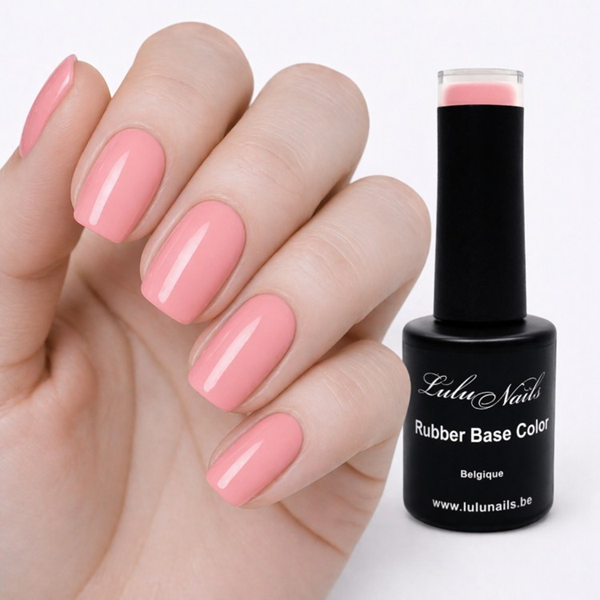
With a Rubber Base Colour, you can also choose to keep the base colour as it is and simply finish the application with the appropriate top coat.
Can you apply a LuluNails colour over a builder gel?
When the builder gel has been correctly applied, cured and prepared in accordance with its protocol, a compatible semi-permanent colour can beused as a coloured top coat.
This allows you to create:
-
red;
-
burgundy;
-
Nude;
-
Milky;
-
chocolate;
-
pink;
-
seasonal colours;
-
French;
-
Nail Art.
The gel creates the structure.
The semi-permanent polish then adds the colour.
Can you mix two semi-permanent polishes from different brands to create a colour?
This is different from simply layering products.
Physically mixing two formulations in a palette or directly in a bottle can alter their behaviour.
Two products may use:
-
different pigments;
-
different photoinitiators;
-
different proportions of ingredients;
-
different viscosities;
-
different polymerisation protocols.
The resulting mixture isis therefore no longer exactly the original product intended by each manufacturer.
To achieve a more predictable result, opt for colours that have already been formulatedin the desired shade or nail art techniques designed for your products.
Can-mix a base coat or gel directly with a colour?
You must also be careful.
Adding coloured polish directly to a builder gel or a base coat alters the original formulation.
In particular, the amount of pigment can affect the way light passes through the product during polymerisation.
The more opaque a product is, or the thicker it is applied, the more important it becomes to follow the recommended protocol precisely.
It is therefore preferable to use products that have already been formulated for their specific purpose:
Rubber Base Colour for a pre-coloured base.
Nude or Milky Builder Gel for a pre-tinted structure.
Semi-Permanent Polish for the final colour.
Why is the lamp important when mixing brands?
This is probably one of the most important points.
Two products labelled UV/LED are not necessarily identical.
Each formulation uses photopolymerisable components that require appropriate exposure.
You must therefore take into account:
-
the product;
-
the thickness;
-
the recommended curing time;
-
the compatible lamp;
-
the position of the hand.
Do not assume that:
more watts always means better polymerisation
or that:
the same duration automatically suits all brands.
Follow the protocol for the product you are using.
Why might a gel- appear hard without being properly cured?
Appearance alone is not always sufficient to judge what has happened throughout the entire thickness of the product.
A layer may appear firm on the surface even though the recommended curing conditions have not been followed.
This is why you should avoid:
-
excessively thick layers;
-
made-up curing times;
-
unsuitable lamps;
-
improvised mixtures of products.
A professional application is based on a reproducible protocol.
Can a lamp from another brand be used?
The brand name of the lamp is not the only criterion.
What matters is its actual compatibility with the system being used.
Check the product instructions regarding:
-
UV/LED;
-
compatible wavelengths, where specified;
-
lifespan;
-
recommended power or model where indicated.
If a manufacturer recommends a specific lamp or system, please follow that recommendation.
Why Does My Installation Come Unstuck When I Mix Brands?
If a installation using several brands comes unstuck, do not immediately assume that the colour is the problem.
There may be several reasons for this:
Inadequate preparation
Dust, cuticles on the nail plate, moisture or product on the skin can affect the hold.
Incompatible products
The different layers may not work together as intended.
Poor flexibility
A very flexible base combinedwith an extremely rigid structure may result in behaviour that differs from that of a homogeneous system.
Poor polymerisation
The curing time or lamp may not be suitable for all the products used.
Layers too thick
More product does not mean better hold.
Natural nail
The product must also be suitable for the type of nail.
How to Test a New Combination of Products?
When you wish to introduce a new product into your routine, do not change five elements simultaneouslyéat the same time.
Ideally, change one variable at a time.
For example:
You are already using:
LuluNails Base
LuluNails Nail Varnish
LuluNails Top Coat
and you want to try out a new colour.
Do not change the following at the same time:
-
Base coat;
-
Primer;
-
lamp;
-
Top Coat;
-
protocol.
Otherwise, if a problem arises, you won’t know which change caused it.
This method is particularly useful for professionals wishing to achieve consistent resultsconsistent results.
Should You Use All Products from the Same Brand?
It goes without saying that two different brands will never work together.
That would be too simplistic.
However, using a consistent system offers several advantages:
An easier protocol to follow
You know which products are designed to work together.
Simpler troubleshooting
If a problem arises, there are fewer variables.
More predictable catalysis
You can follow the system’s precise recommendations.
More reproducible results
Particularly important when working with several clients.
Easier training
For a beginner, learning a complete system is simpler than having to combine numerous different references straight away.
Which LuluNails routine should you choose for semi-permanent nail varnish?
For a standard application on suitable nails:
1. Nail preparation
2. Preparation products in accordance with the protocol
3. Suitable LuluNails Base Coat
4. LuluNails Semi-Permanent Nail Polish
5. Compatible LuluNails Top Coat
6. Curing according to the instructions for each step
For added strength, the classic Base Coat can be replaced or supplemented by a suitable system such as a Rubber Base or Builder Gel, in accordance with the relevant protocol.
What Routine for More Flexible Nails?
Depending on the condition and length of the nail, a Rubber Base can provide greater flexibility and volume than a classic base coat.
Example:
Preparation → Rubber Base → LuluNails colour → Top Coat
The product should always be chosen according to the natural nail and the desired result.
What is the routine for a Builder Gel build-up?
For an application requiring more structure:
Preparation → designated adhesion system → Flexible Builder Gel → correction if necessary → Semi-Permanent-Permanent → Top Coat
The advantage is that the structure is created independently of the colour.
You can then change the shade regularly whilst maintaining a suitable base structure, provided the protocol allows it.
HEMA- and TPO-free: Can you still mix brands?
The fact that two products are advertised as being free from HEMA and TPO does not mean that theyhave the same formulation.
‘HEMA- and TPO-free’ is not a compatibility system.
Two products free from HEMA and TPO may still have:
-
different viscosities;
-
different photoinitiators;
-
different instructions;
-
different adhesion characteristics.
You must therefore continue to follow the instructions for each product code.
The relevant LuluNails ranges are formulated without HEMA or TPO.
As with all UV/LED products:
-
avoid contact with the skin;
-
do not leave any uncured product on the cuticles;
-
adhere to the specified curing times;
-
use a compatible lamp.
Beginners: Should You Buy Several Brands or Start with a Single System?
When learning semi-permanent nail art, it is often easier to start with a single, consistent system.
This allows you to learn properly:
-
preparation;
-
amount of Base Coat;
-
colour coats;
-
curing;
-
finishing;
-
removal.
Once your technique becomes consistent, you’ll have a much better understanding of the impact of each step.
You’ll then be able to evaluate other products more easily.
Professional: Why Standardise Your Products?
For a nail technician, the issue is not just about the success of an application.
You need to achieve a reproducible result:
client after client.
Using a consistent protocol makes it possible, in particular, to:
-
work more quickly;
-
to train a new member of staff more easily;
-
to understand the causes of a problem;
-
manage stock;
-
track working hours;
-
to maintain consistent quality.
This does not mean that a professional can only useone brand.
Rather, it means that every combination used must be known, mastered and in accordance with the product instructions.
LuluNails Products to Build a Complete System
LuluNails offers variousvarious categories to help you build a coherent routine:
Preparation
-
Cleaner;
-
Nail Prep;
-
Primer;
-
files;
-
buffers.
Base coats
-
Base Coat;
-
Rubber Base;
-
Rubber Base Colour.
Strengthening & Construction
-
Flexible Builder Gel ;
Colours
-
Gel Polish 7 ml ;
-
GelColor 10 ml.
Finish
-
Glossy Top Coat ;
-
Matt Top Coat;
-
Various finishes depending on the product code.
Equipment
This allows both beginners and professionals to choose the different stages of their manicure from within the same product range.
FAQ – Can you mix and match brands in nail art?
Can you use a base coat from one brand and a polish from another?
This can sometimes work, but compatibility and performance should not be taken for granted. Follow the instructions for the products in question.
Can you use a top coat from a different brand?
This is possible with some systems, but always check its compatibility with the colour and its curing protocol.
Can you apply a LuluNails top coat over a Builder Gel?
Yes, provided it is a compatible system and the builder gel has been correctly prepared in accordance with its protocol.
Can semi-permanent nail varnish be applied over a Rubber Base?
Yes, provided they are compatible. The Rubber Base can create a reinforced base before the colour is applied.
Can two colours from different brands be mixed in the same pot?
It is preferable toavoid altering the original formulations directly without the manufacturer’s guidance. Mixing may alter the polymerisation behaviour and texture.
Can Builder Gel be mixed with semi-permanentnail varnish?
It is better to use a pre-tinted Builder Gel when a coloured build is desired, rather than arbitrarily altering its formulation.
Can any LED lamp be used with any gel?
No. Check the product’s compatibility and instructions. Not all UV/LED lamps and systems should be considered the same.
Why does my nail varnish peel off when I switch brands?
This may be due to preparation, adhesion, thickness, curing or an incompatibility between certainsteps.
Is it better to use the base coat, colour and top coat from thebrand?
To achieve a more predictable and easier-to-diagnose protocol, using a consistent system offers numerous advantages.
Where can I buy a complete semi-permanent nail polish system in Belgium?
LuluNails offers preparation products, base coats, rubber base, builder gel, semi-permanent nail polishes, top coats, UV/LED lamps and professional accessories in Belgium.
Conclusion: Mixing Brands Is Possible, but Compatibility Matters More Than the Logo
The question isn’t simply:
“Can I use two different brands?”
The better question is:
“Have these products been designed or tested to work properly together, and am I following their protocol?”
To achieve a consistent application:
proper preparation compatible products correct layers suitable lamp correct curing good finish.
For a beginner, starting with a coherent system makes learning much easier.
For a professional, having a precise grasp of the combinations used enables more consistent results.
At LuluNails Belgium, you can find the various steps required for a professional application:
Base Coat → Rubber Base → Builder Gel → Semi-Permanent Polish → Top Coat → UV/LED lamp.
LuluNails Belgium – Professional Nail Products, Semi-Permanent Nail Polish, Gels & Nail Equipment.