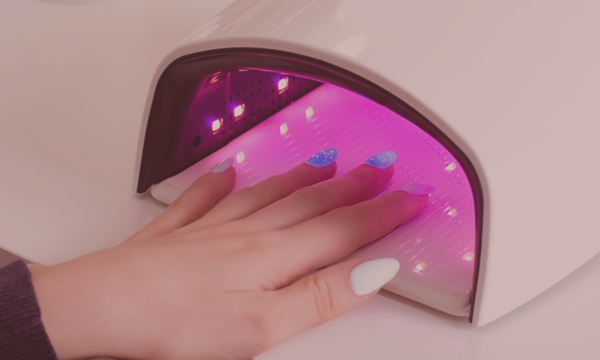
Does your builder gel seep into your cuticles? Find out the causes, the right viscosity, how much to use, and how to better control a self-levelling gel.
Why does my builder gel seep into my cuticles? Viscosity, quantity and solutions | LuluNails Belgium
Is your Builder Gel seeping into the cuticles or down the sides of the nail before curing?
This is a common problem when you start work with a self-levelling builder gel, but it can also happen to a professional whenshe changes the viscosity, the amount of product used or the technique.
A Builder Gel that spreads quickly isn’t necessarily a bad product. It may simply be too runny for your working speed, applied in too large a quantity, or left on the nail for too long before being placed under the lamp.
In this LuluNails Belgium guide, discover how to better control your builder gel, choose a suitable viscosity and achieve a more precise build.
Why does builder gel run into the cuticles?
There are several factors that can explain why a builder gel moves towards the skin.
1. Builder Gel is highly self-levelling
A self-levelling gel is designed to spread gradually across the surface of thenail.
This property helps to achieve a smoother surfaceand can reduce the amount of filing required once the technique has been mastered.
However, if the product is very runny, it may continue to spread whilst you are working.
You therefore need to strike a balance between:
self-levelling control of the material working speed.
2. You are using too much gel
Using a large amount of product does not automatically improve the strength of the installation.
On the contrary, using too much product can:
- seep towards the cuticles;
- move into the lateral folds;
- create a structure that is too thick;
- complicating the structure;
- requiring more trimming;
- complicate proper polymerisation.
Work with the amount required for thestructure, rather than a large amount applied in a single go.
3. You wait too long before curing
With a Self-levelling Builder Gel, the material continues to shiftpolymerisation.
If your nail tip is already properly built up, there’s no need to wait long before placing the nail under the lamp.
For a particularly runny gel, working one finger at a time can give you greater control, provided the product’s instructions allow it.
4. Your viscosity is not suited to your working speed
The viscosity refers to the gel’s fluidity.
Not all Builder Gels are therefore applied in the same way.
Fluid viscosity gel
It spreads quickly and can self-level very rapidly.
It may be suitable for someone who works quickly, but requires more control around the cuticles.
Medium-viscosity gel
It generally offers a good balance between fluidity and stability.
It allows the material to be guided whilst offering a degree of self-levelling.
Thicker gel
It stays in place better once applied.
It can allow more time to work on the design, certain extensions or more technical constructions.
The best choice therefore depends on your technique and the type of installation, and not solely on the label ‘professional’.
How can you prevent Builder Gel from running?
Prepare the right amount before application
Do not overload your brush.
Start with a controlled amount and only add more product when necessary.
Work carefully around the cuticles
The area near the cuticles must remain thin and clean.
Avoid applying a large amount of gel directly to this area.
Gradually apply the product without touching the skin.
Check the sides
Before curing, check:
- the cuticle area;
- the left side;
- the right side;
- the apex;
- the free edge.
If the gel starts to migrate, correct it immediately.
Cure as soon as the shape is correct
A self-levelling gel does not need to remain on the nail for several minutes.
Once the product has been applied evenly, cure it according to the product’s instructions using a compatible UV/LED lamp.
Can you turn your finger over to help with self-levelling?
Some techniques briefly utilise gravity to help re-centre the material.
This can make it easier to create an apex with certain products, but this movement must be controlled.
After turning the finger over, check again:
cuticles → c&removed → apex → free edge
before curing.
The gel must not be left unattended simply because it is self-levelling.
Does ‘self-levelling’ mean no sanding is required?
Not automatically.
A self-levelling construction gel can help achieve a smoother surface and reduce the amount of filing required, provided the application and design are carried out correctly.
However, if the structure is incorrect, it is better to make a small correction rather than leave it as it is:
- a poorly positioned apex;
- an irregular surface;
- incorrect parallel lines;
- a free edge that is too thick.
The aim of a ‘image-free’ technique is to position the material more effectively as it is applied, not to avoid any corrections at all costs.
Which Builder Gel should you choose when you’re just starting out?
For a beginner, an extremely runny product can be difficult to control around the cuticles.
A medium viscosity or self-levelling but sufficiently stable may be easier to control whilst you’re learning.
You should also start with short or medium lengths before moving on to larger structures.
The aim is first and foremost to learn:
- the correct amount of product;
- how to check the cuticles;
- creating the apex;
- the parallels;
- the distribution of matter;
- Proper catalysis.
Builder gel: in a pot or a bottle?
Both formats have their place.
Builder Gel in a bottle
The built-in brush is particularly handy for:
- coating;
- natural nails;
- short designs;
- strengthening;
- light apex;
- quick application.
Builder gel in a pot
The gel in a pot with a separate brush can offer more possibilities for:
- larger designs;
- extensions;
- structural repairs;
- technical systems;
- greater lengths.
The choice must always depend on the actual properties of the product.
Which LuluNails Builder Gel should you choose?
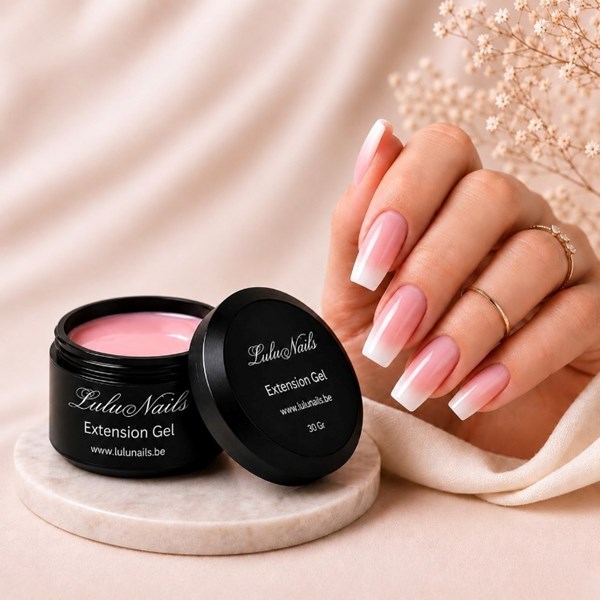
The LuluNails Builder Gel comes in a range of shades to tailor the build to the desired result:
Milky Natural
For natural, Milky Nails, French and Baby Boomer styles.
Nude Pink
For a natural and elegant finish.
Rose Cover
For greater coverage and to visually even out the nail plate.
Nude Caramel
To achieve a warmer, more modern nude base.
Transparent / Clear
For builds that will subsequently be covered with colour or incorporated into various nail art designs.
Discover the LuluNails Gel Construction & Builder Gel category here.
LuluNails Builder Gel – HEMA- and TPO-free
The LuluNails builder gels in question are formulated without HEMA or TPO.
However, this does not mean that a UV/LED product is hypoallergenic or that no reaction can occur.
Always avoid contact between the uncured product and the skin.
If the gel runs into the cuticles or the side folds, carefully remove the excessbefore curing.
Also follow the curing instructions specific to the product being used.
FAQ – Builder Gel running
Why does my Builder Gel run towards the cuticles?
Common causes include the gel being too runny for your working speed, applying too much, or waiting too long before curing.
How can you prevent the gel from touching the cuticles?
Use less product, keep the cuticle area thin, check theand cure as soon as the shape is correct.
Is a self-levelling gel more difficult to use?
Not necessarily. It can make it easier toan even surface, but its consistency must match your working speed.
What viscosity should a beginner choose?
A medium or self-levelling gel that is sufficiently stable is generally easier to control than an extremely runny gel.
Why does my apex disappear before the lamp?
The product may continue to spread if it is too runny or if you wait too long before curing.
Can I work on just one finger at a time?
Yes, provided the product’s instructions and your technique allow it. This can be useful with a very fluid gel.
Does ‘self-levelling’ mean no filing is required?
No. Self-levelling can reduce the need for filing, but correction is still preferable when the shape is incorrect.
What should you do if the gel comes into contact with the skin?
Remove any uncured product from the skin before curing and follow the product’s instructions for use.
Discover LuluNails Belgium Builder Gels
Are you looking for a professional builder gel in Belgium for coating, strengthening, filling or extensions?
Discover the LuluNails Builder Gels, available in a range of shades: Nude, Milky, Rose, Cover and Clear.
LuluNails is a Belgian brand specialising in products and equipment fornail care in Liège, with online ordering and delivery throughout Belgium and Europe.