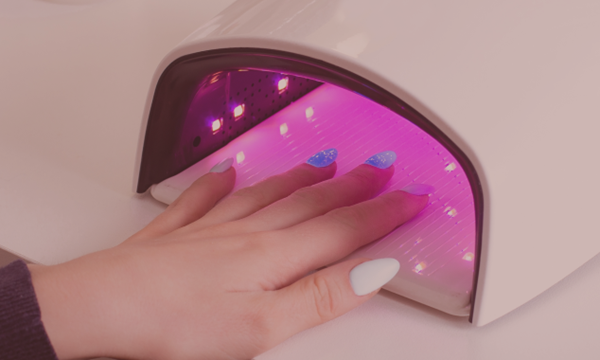
Does your UV gel become too runny in summer or too thick in winter? Find out how temperature affects Builder Gel, along with best practices and tips from LuluNails Belgium.
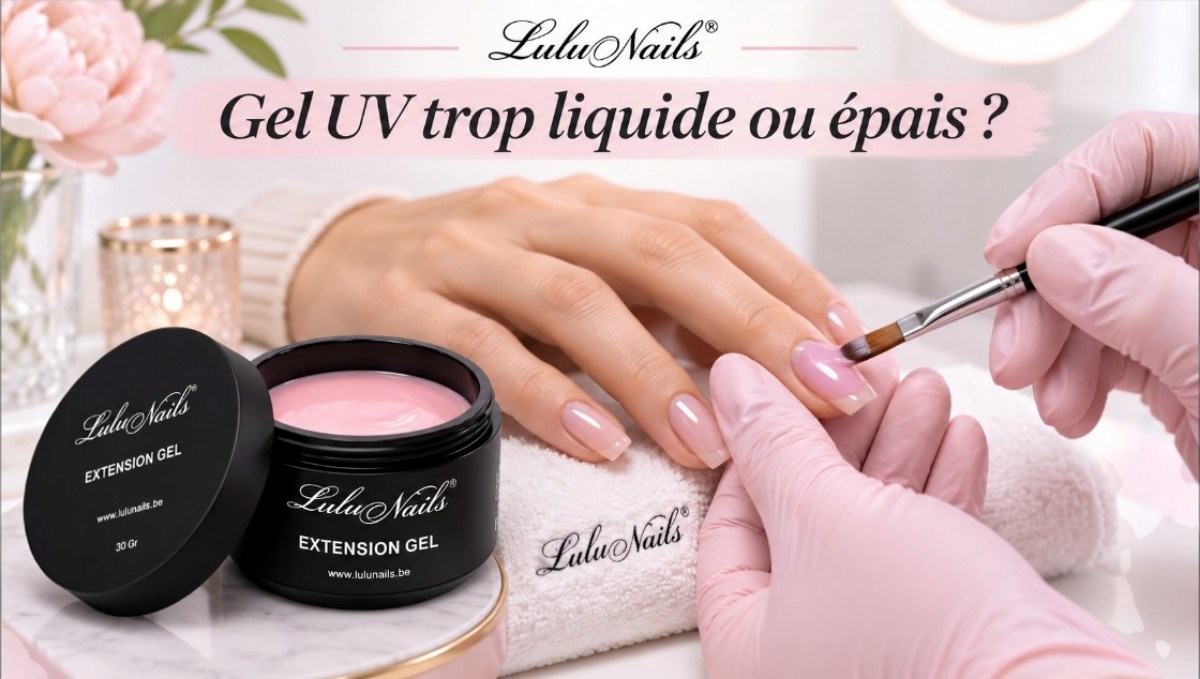
UV Gel Too Runny or Too Thick: Why Does This Happen and How Can You Fix It? | LuluNails
Does your builder gel become runny when it’s hot? Is your builder gel thicker in winter? Or does your self-levelling gel run into your cuticles when it used to be easy to work with?
Temperature, formulation and storage conditions can alter the behaviour of certain UV/LED gels.
These changes can make it more difficult to build the apex, coat natural nails and apply gel without filing.
At LuluNails Belgium, a Belgian brand specialising in professional nail care products in Liège, we explain how to understand these differences in texture, recognise mistakes and store your products more effectively.
Quick answer: why does the texture of my UV gel change?
A UV gel can become more fluid in the heat and more viscous in the cold.
This behaviour depends on its formulation. Some gels remain relatively stable, whilst others change consistency more significantly depending on the temperature.
Here are the first things to check:
-
Gel too runny: check the temperature of the room and the pot, as well as the product’s usual viscosity.
-
Gel too thick: check whether the product has been stored in a cold place.
-
Gel running into the cuticles: check the amount of product used, the temperature and your working speed.
-
Gel containing hard lumps: check for possible exposure to UV or sunlight.
-
Gel that has permanently changed in appearance: do not use it until you have checked its condition and the manufacturer’s recommendations.
Key point: a change in viscosity due to temperature is not automatically a defect. However, a gel that is partially polymerised or has deteriorated must not be used.
1. Why does my builder gel become too runny in summer?
As the temperature rises, some UV/LED gels temporarily lose some of their viscosity.
They may then spread more quickly over the nail.
For a nail technician, this can cause several difficulties:
-
The gel runs down towards the cuticles.
-
The tip flattens out before curing.
-
The gel slides towards the sides.
-
The application requires more corrections.
-
The self-levelling gel becomes difficult to control.
Professional example
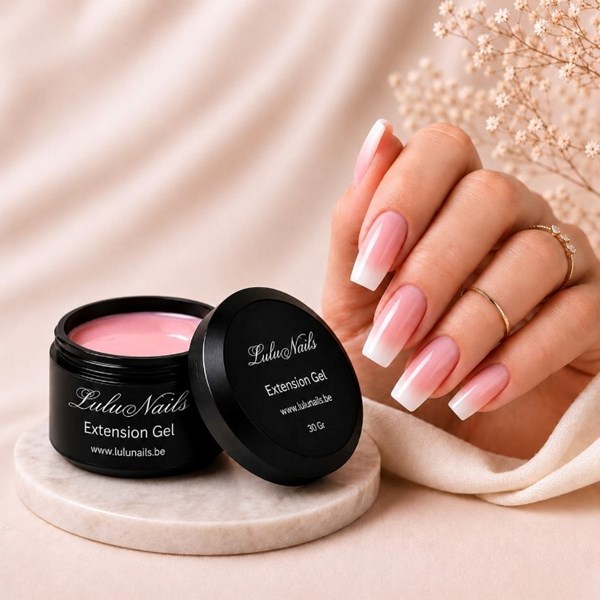
You usually use a Nude Pink Builder Gel to create a build-up without filing.
At the usual temperature, the gel evens out gradually.
But on a particularly hot day, you notice that it spreads more quickly.
The formulation hasn’t necessarily changed: its viscosity may simply be affected by the temperature.
What should you do?
Work in a room with a stable temperature, avoid direct exposure to sunlight and do not leave your pots near a heat source.
You can also build the nails one at a time to maintain better control.
If the product has become unusually runny, check the recommended storage conditions before using it.
2. Why does my Builder Gel thicken in winter?
Conversely, lower temperatures can make some builder gels more viscous.
The gel then becomes less fluid and self-levels more slowly.
This may give the impression that the product has become difficult to work with.
The most common signs
-
The gel is harder to apply.
-
The brush leaves more visible brushstrokes.
-
The gel moves slowly.
-
It takes longer to self-level.
-
Application requires more handling.
How can you achieve a texture that is easier to work with?
Store the product in a stable indoor environment, in accordance with the manufacturer’s instructions.
Allow a cooled product to gradually return to a suitable room temperature before use.
Warning: never heat a pot of gel in the microwave, on a radiator or using an improvised heat source.
Excessive heat may alter the product, damage its packaging or compromise its properties.
Do not dilute your Builder Gel with water, Cleaner or acetone either.
3. Liquid gel, thick gel and thixotropic gel: what are the differences?
Not all builder gels have the same texture.
The choice of gel depends, in particular, on your technique, the desired working time and your level of experience.
Self-levelling gel
A self-levelling gel spreads gradually across the nail.
It can help to achieve a smooth surface and reduce the need for filing when the technique is well
It is valued for:
-
Strengthening natural nails.
-
Natural applications.
-
Short extensions.
-
Certain filing-free techniques.
-
Professional refills.
Thick builder gel
A more viscous gel can offer greater control when creating shapes and structures.
Depending on its formulation, it is particularly suitable for certain extensions and builds requiring a more stable material.
Thixotropic gel
A thixotropic gel behaves in a distinctive way: its viscosity may decrease whilst being worked, then increase again when left to rest.
It can therefore maintain better stability when not being handled, whilst making modelling easier.
However, thixotropy does not mean that a gel is completely immobile or insensitive to heat.
Comparison table: which texture should you choose?
| Type of gel | Behaviour | Possible uses |
|---|---|---|
| Fluid gel | Spreads quickly | Thin coating depending on formulation |
| Self-levelling gel | Levels out gradually | Coating and building without filing |
| Thick gel | Moves more slowly | Modelling and extensions |
| Thixotropic gel | Becomes more fluid when worked | Controlled build-up |
| Acrygel / Polygel | Generally very stable before curing | Extensions and shaping |
The best product isn’t necessarily the thickest.
Toachieve a successful application, it is essential to choose a texture suited to your working method.
4. Why does my gel run into the cuticles?
A builder gel can run into the cuticles for several reasons.
1. The nail is too warm
Heat can cause certain gels to spread more quickly.
2. You are applying too much gel
An excessive amount is more difficult to control.
When applying a base coat, it is better to control the distribution rather than automatically applying a large dollop of gel.
3. You are working for too long before curing
Whilst you are correcting one finger, the gel applied to the other fingers may continue tospread.
4. The hand is positioned incorrectly
The angle of the finger can cause the gel to shift to one sideé.
5. The viscosity does not suit your technique
A very runny gel can be difficult to control when you’re just starting out.
LuluNails solution
To better control the application:
-
Prepare the natural nail correctly.
-
Choose a suitable builder gel.
-
Apply the required amount.
-
Check the edges immediately.
-
Check the apex and the sides.
-
Cure according to the product’s instructions.
-
Work on one nail at a time if necessary.
Never cure a product that has run onto the skin. First, carefully remove any uncured material.
5. How should you store your UV/LED gels correctly?
Proper storage helps to minimise problems caused by temperature, light and contamination.
Keep your pots closed
Close the products immediately after use.
A pot left open for longer than necessary may be exposed to dust and light.
Avoid direct sunlight
Light-curing products are sensitive to certain wavelengths of light.
Inappropriate exposure may result in partial curing.
Do not leave products in a car
A car can be subject to significant temperature fluctuations, both in summer and winter.
Keep gels away from the UV/LED lamp
Avoid leaving your pots open near a curing lamp that is in use.
Follow the manufacturer’s instructions
Storage temperature, shelf life and conditions of use may vary from one formulation to another.
Check the label and the specific information for your LuluNails product.
6. My gel contains small hardened lumps: can I still use it?
A UV gel containing hardened lumps, unusual lumps or a polymerised skin on the surface may have been exposed to light capable of triggering polymerisation.
This phenomenon should not be confused with simple thickening caused by the cold.
If a gel appears to be partially polymerised, do not use it and do not attempt to salvage it by adding liquid.
Check the condition of the product, its use-by date or its shelf life after opening, and contact the supplier if necessary.
A product that has gone off must not be applied to a client.
7. How can you achieve a file-free gel build using a self-levelling gel?
A file-free build is a technique that relies on mastering the gel, preparing the nail and creating a balanced shape.
Here are the main steps.
Step 1: examine the natural nail
Check the condition of the nail plate and ensure there are no issues that would prevent a cosmetic application.
Step 2: gently prepare the nail
Treat the cuticles without damaging the living tissue.
Prepare the surface according to the protocol, without excessive filing.
Step 3: apply the appropriate base coat
Depending on the Builder Gel chosen, a Base Coat or another adhesion method may be required.
Follow the instructions for the system being used.
Step 4: apply the gel
Apply a controlled amount of Builder Gel, then spread it out with the brush.
Step 5: create the tip
Concentrate the reinforcement in the appropriate area according to the length and shape.
The area near the cuticles should remain relatively thin.
Step 6: allow the gel to self-level
Observe how the gel moves and make any necessary corrections before curing.
Step 7: Cure correctly
Use a compatible UV/LED lamp and follow the exact protocol.
Step 8: Check the build
Check the nail from the front, side and top.
The aim is a harmonious and well-proportioned structure, without any excess material.
Professional tip: filing-free nail building does not mean that no corrections are ever necessary. Safety, structure and the quality of the application remain the top priorities.
8. Which LuluNails gels should you choose depending on your technique?
LuluNails offers several product ranges designed for professional use.
LuluNails Flexible Builder Gel in a bottle
This range is suitable for the coating and strengthening techniques specified in the product description.
It may, in particular, &be of interest to professionals looking for a brush-on application.
LuluNails Builder Gel in a pot
Available in several shades and sizes, it allows you to work with different building techniques depending on the formulation chosen.
Natural colours such as Rose Nude, Nude Caramel, Rose Cover, Milky Naturel and Transparent can be used to create a variety of styles.
LuluNails Rubber Base
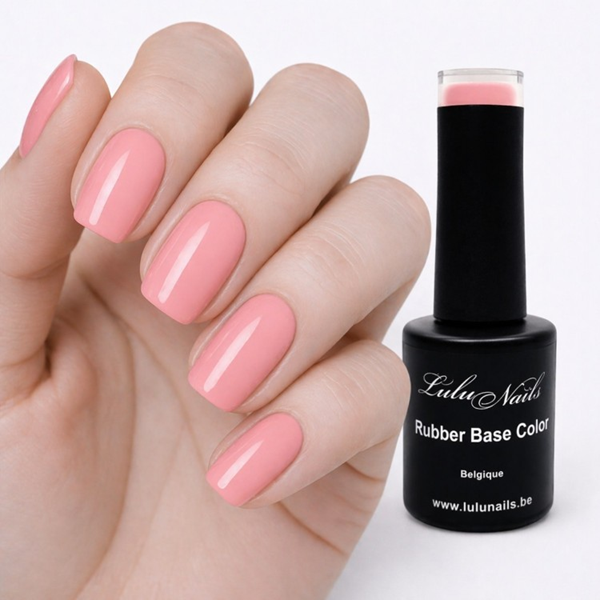
It is primarily intended for basic and cosmetic strengthening techniques suited to the natural nail, depending on the product code.
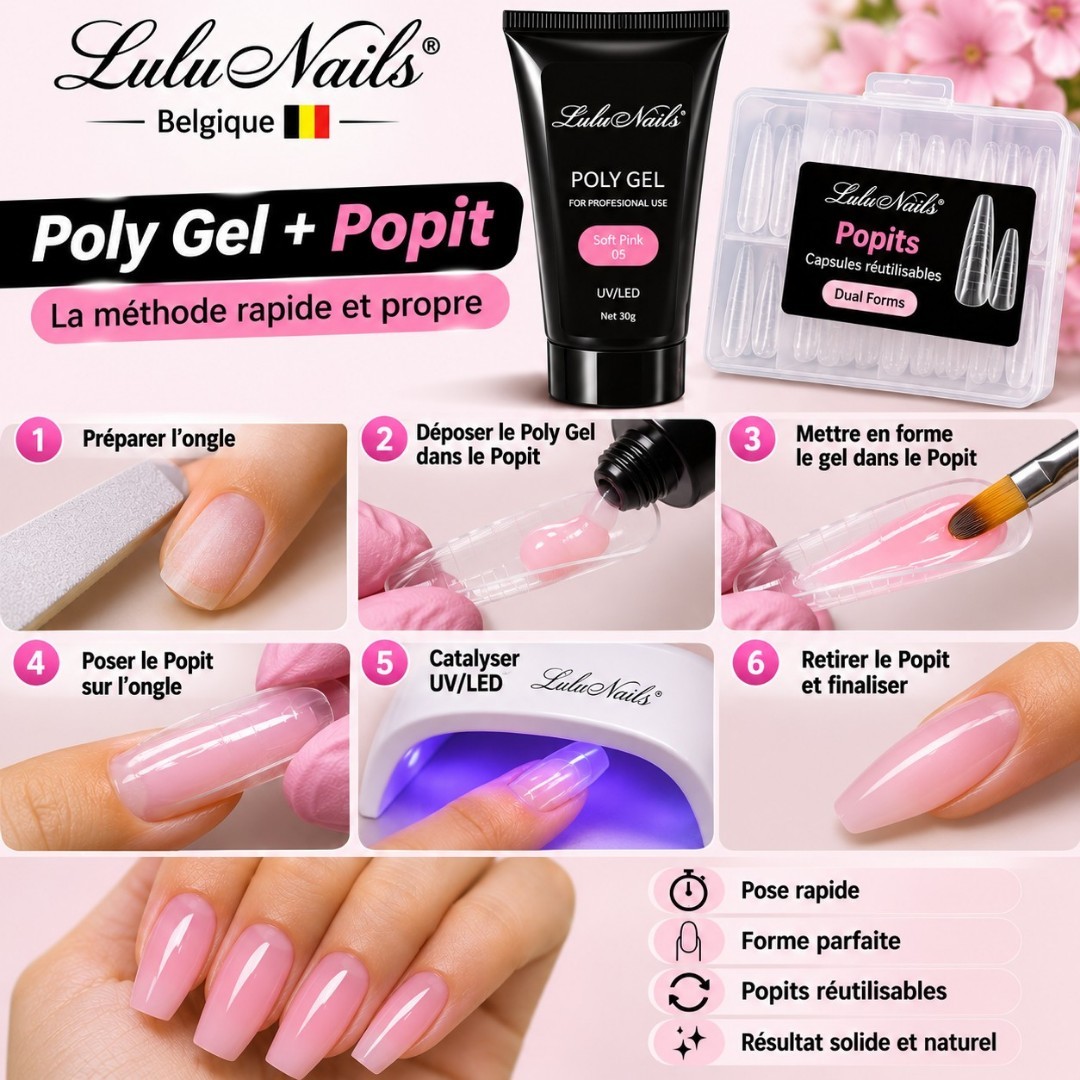
LuluNails Acrygel / Polygel
.jpg)
Acrygel is generally less fluid than a self-levelling builder gel.
It may be of interest to professionals wishing to control the material whilst shaping a nail extension.
Discover the different ranges at www.lulunails.be.
9. LuluNails HEMA-free builder gel
LuluNails is a Belgian brand based in Liège, offering ranges of gels and semi-permanent nail polishes formulated without HEMA.
These characteristics must be checked on the product details page for each item.
The absence of HEMA and TPO does not mean that a product is hypoallergenic or that it cannot cause any reaction.
Application without skin contact and full curing in accordance with the manufacturer’s instructions remain essential.
UV gel too runny, too thick and storage
Why does my UV gel become runny when it’s hot?
Temperature can reduce the viscosity of certain UV/LED gels and make them more fluid before curing.
Why does my builder gel become thicker in winter?
Cold temperatures can increase the viscosity of certain formulations and slow down their self-levelling.
Can I put my UV gel in the fridge?
This is not a universally recommended method. Follow the manufacturer’s storage instructions and avoid unnecessary temperature fluctuations.
Can I warm up a Builder Gel that has become too thick?
Allow it to gradually return to a room temperature in line with the manufacturer’s instructions. Do not use an improvised heat source.
Can I add Cleaner to gel that is too thick?
No. Cleaner is not a universal thinner for Builder Gel. Do not alter the formulation unless the manufacturer has explicitly provided instructions for doing so.
How can I prevent my Builder Gel from running into the cuticles?
Check the amount of gel, the viscosity, the working temperature, the position of the finger and the time before curing.
Why does my UV gel form lumps?
Inadequate light exposure can cause partial polymerisation. Other issues may also arise. Do not use a gel that contains unusual hardened lumps.
Which gel should a beginner choose?
A medium-viscosity gel with controlled self-levelling can make learning easier. The choice also depends on the protocol and technique.
Liquid gel or thick gel for Popits?
The material must be compatible with the technique and sufficiently controllable. Some professionals prefer Acrygel or a more stable gel for Popits.
Do all UV gels change texture with temperature?
No, not in exactly the same way. The extent of the change depends on the formulation and the rheological behaviour of the product.
Where can I buy a professional builder gel in Belgium?
At www.lulunails.be, you can discover various ranges of builder gels, Flexible Builder Gels, Rubber Bases, Acrygels and nail accessories.
Does LuluNails offer gel nail training courses in Liège?
Yes. LuluNails offers nail technician training courses in Liège to teach techniques for preparation, building, wrapping, filling and finishing.
11. Going the extra mile: professional advice from LuluNails
To improve your nail applications, have a look at our guides:
-
Which Builder Gel Should You Choose When Starting Out?
-
Why Does My Builder Gel Run into the Cuticles?
-
How to Apply a Base Coat with Bottle Builder Gel?
-
Why Does Builder Gel Heat Up Under the UV/LED Lamp?
-
Acrygel or Builder Gel: What’s the Difference?
These articles will help you make better choices when selecting products and gain a better understanding of the various nail techniques.
Conclusion: controlling the temperature to work more effectively with your builder gel
A UV gel that is too runny or too thick is not necessarily a bad product.
Its texture can vary depending on temperature, formulation and storage conditions.
For professional application, it is important to store products correctly, choose the right viscosity and follow the preparation and curing protocols.
Whether you’re looking for a self-levelling builder gel, a builder gel in a pot, a rubber base or an Acrygel, LuluNails supports you in your manicure techniques.
LuluNails Belgium – Professional nail products, UV/LED gels, semi-permanent nail polishes and training courses in Liège.
Discover our world at www.lulunails.be.