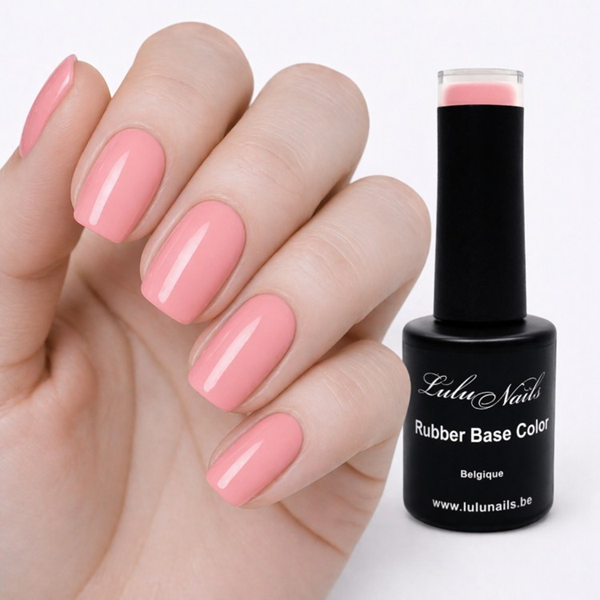
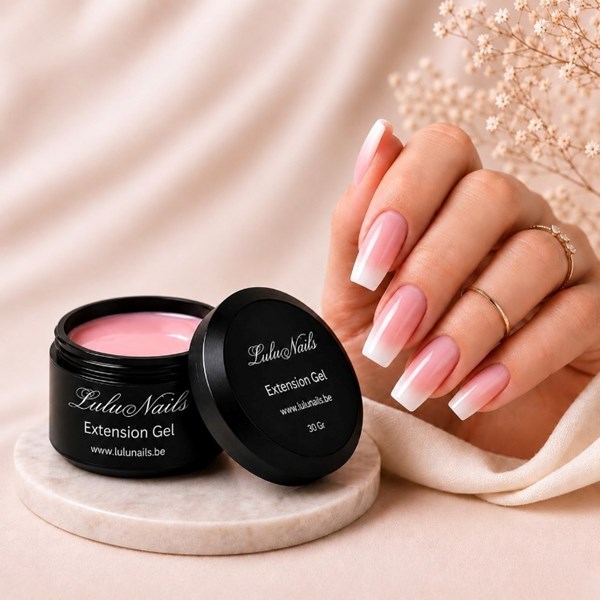
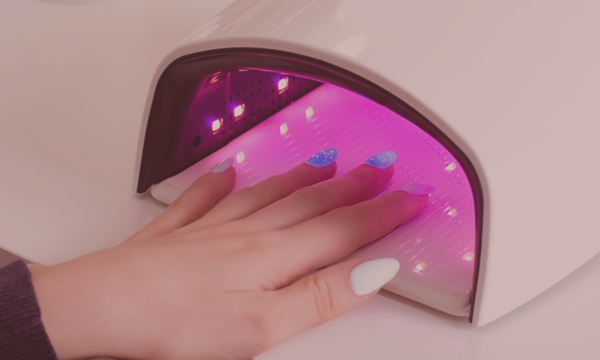
Should you let your nails breathe between applications of semi-permanent nail varnish, Builder Gel or construction gel? Find out when to take a break, how long to wait and how to look after your nails with LuluNails Belgium.
Should Nails Be Allowed to Breathe Between Manicures?
This is one of the most frequently asked questions after a manicure:
should you let your nails breathe between applications of semi-permanent polish or gel?
The short answer is:
No, the nail plate does not “breathe” in the same way as skin.
The visible part of the nail is mainly made up of keratin. It therefore does not need to be left without polish simply to receive oxygen from the air.
However, this does not mean that you should systematically apply one coat after another without checking the condition of the natural nail.
A break may be beneficial when the nails are:
-
very thin;
-
brittle;
-
split;
-
painful or sensitive;
-
damaged after removal;
-
excessively filed;
-
brittle;
-
or when irritation appears around the nails.
So the right question is not just:
“Do my nails need to breathe?”
but rather:
“What condition are my nails in after removal?”
Should you take a break between two semi-permanent manicures?
There is no single answer that applies to everyone.
After removing the semi-permanent polish, take a close look at your nails.
Nails in good condition
If the nail plate is:
-
even;
-
not painful;
-
not excessively thin;
-
without significant splitting;
-
with no irritation around the cuticles;
it is not necessary to assume that the nail must remain bare simply to ‘breathe’.
However, a period without nail varnish can help to moisturise the nails and cuticles further and allow you to monitor their condition.
Brittle nails
If your nails become:
-
soft;
-
very thin;
-
splitting;
-
brittle;
-
sensitive;
it is best to avoid immediately covering up the problem with a new manicure.
Taking a break allows you to protect the nail, moisturise it and, above all, let the weakened part gradually grow back.
How Long Should You Wait Between Two Semi-Permanent Nail Polish Applications?
There is no universal timeframe that applies to everyone.
The American Academy of Dermatology recommends, in particular, allowing a nail-polish-free period ofapproximately one to two weeks or more between certain gel manicures to allow the nails to recover and rehydrate.
However, the actual condition of the nail remains the key factor.
| Condition of the nail after removal | What should you do? |
|---|---|
| Healthy, non-sensitive nail | Check the condition before applying a new set |
| Slightly dry nail | Moisturise regularly |
| Thin or flexible nail | Consider taking a break |
| Split nail | Wait and protect the regrowth |
| Painful nail | Do not apply a new coat straight away |
| Irritation around the nail | Stop application and seek professional advice if necessary |
| Unusual change in colour or shape | Do not mask the problem with a new application |
The ideal duration therefore depends more on the condition of the nail than on a fixed number of days.
Why Might Nails Appear More Brittle After Removal?
When a nail appears verythin after several applications, the problem does not necessarily stem from the gel or semi-permanent polish itself.
The entire procedure needs to be reviewed.
1. Overly aggressive removal
Pulling off or peeling away the semi-permanent polish can strip away part of the surface of the natural nail plate.
This is one of the most significant mistakes to avoid.
If the product starts to peel off, do not pull at it.
Use the removal method specified for the product or have it removed by a professional.
How to Remove Semi-Permanent Nail Polish Without Damaging Your Nails? | LuluNails Belgium & France
2. Excessive filing of the natural nail
When preparing the nail, the aim is not to remove several layers of the nail plate.
Over-filing can gradually cause the nail to become:
-
thinner;
-
sensitive;
-
more flexible;
-
more brittle.
Preparation must be controlled and adapted to the system being used.
3. Incorrect use of the sander
A professional sander is a very useful tool for filling and certain types ofapplications.
However, it requires a good level of skill.
Excessive pressure, the wrong sanding pad or sanding the same area for too long can cause unnecessary damage to the natural wood surface.
This is also why technical training is important if you wish to work professionally.
4. Removing Builder Gel or construction gel
The same principle applies to gels.
Builder gel must not be torn off the nail.
During a top-up, only the necessary amount of product is removed, depending on the technique used.
When the entire set needs to beremoved, the removal process must follow the product’s protocol.
Semi-Permanent Polish, Builder Gel or Gel: Which Technique Is Most Damaging?
It would be incorrect to say that any single technique automatically damages the nails.
The result depends heavily on:
preparation application curing shaping removal.
A manicure that is applied and removed correctly is very different from one that is:
-
that has been ripped off;
-
that has been cut too short;
-
incorrectly cured;
-
applied to the skin;
-
or removed using a technique that is too aggressive.
The choice of system must also be suited to the natural nail.
What is the difference between semi-permanent nail varnish, rubber base and builder gel?
Semi-Permanent Nail Polish
Its main benefits are:
colour, finish and durability.
On a sufficiently strong natural nail, a suitable Base Coat can be applied before the colour.
Rubber Base
Rubber Base generally provides more body and flexibility thana standard Base Coat.
It may be useful for certain natural nails requiring slight reinforcement.
Builder Gel
Builder Gel allows for further work on the structure.
Depending on the product used, it can provide:
-
coating;
-
strengthening;
-
a slight apex;
-
correction of minor irregularities;
-
supporting natural nail growth.
Building Gel
Building gel is designed to create more structure.
In particular, it can be used for:
-
construction;
-
extensions;
-
templates;
-
structural corrections;
-
long lengths.
The hardest product is therefore not automatically the best.
You must choose the system that suits thenail and the desired result.
Can Semi-Permanent Nail Polish Be Applied All Year Round?
Some people have manicures one after the other over long periods.
It is therefore important to check the following regularly:
-
the condition of the nail plate;
-
the cuticles;
-
any signs of peeling;
-
any changes in colour;
-
sensitivity;
-
the quality of the removal.
If the nail gradually starts to become very thin or sensitive, simply continuing to apply a new coat to hide the problem is not a good strategy.
It is better to understand the cause.
Do Nails Really Need to Breathe?
No, not in the literal sense.
The visible nail plate consists mainly of keratinised cells.
It does not use oxygen from the air in the same way as the lungs.
To say:
“The gel must be removed so that the nail can breathe”
is therefore an oversimplification.
A more accurate way of putting it would be:
“It may be helpful to leave the nail free of any product when it is weakened, so that you can observe it, moisturise it and allow a healthy nail plate to grow gradually.”
This distinction is important.
How to Look After Your Nails Between Manicures?
Moisturise the cuticles
Apply cuticle oil regularly.
It helps to keep the skin around thenail supple and comfortable.
You can also use hand cream.
Avoid peeling off the polish
Never remove:
-
semi-permanent nail varnish;
-
Rubber Base;
-
Builder Gel;
by pulling them off with your fingers.
Aggressive removal may strip away the surface layers of the nail plate.
Wear gloves for certain tasks
Repeated exposure:
-
to water;
-
household products;
-
detergents;
can dry out your hands and nails.
Wear suitable gloves when carrying out prolonged household chores.
Keep your nails relatively short if they are brittle
A very thin nail will generally find it harder to cope with being very long.
During a recovery period, a shorter length helps to limit mechanical stress.
Should you use a nail hardener whilst taking a break?
Not necessarily.
A brittle nail may need, above all:
-
proper removal;
-
mechanical protection;
-
regular moisturising;
-
time to grow back.
Not all products labelled as “strengtheners” have the same formulation or the same function.
Before applying several products, first identify why the nail is brittle.
Can you apply builder gel to brittle nails?
It depends on what you mean by “brittle”.
A naturally flexible but healthy nail is not the same as a nail that is:
-
excessively thin;
-
painful;
-
showing signs of irritation;
-
with unusual discolouration;
-
severely split following improper removal.
A Builder Gel can be used to create a coating on a nail suitable for this technique.
However, gel should not be used to conceal a problem that first needs to be identified.
Why is Correct Curing Important?
UV/LED products must be properly cured.
Always ensure:
-
a compatible lamp;
-
the specified curing time;
-
the recommended thickness;
-
the correct hand position;
-
the product instructions.
An excessively thick coat may appear hard on the surface whilst being insufficiently cured deeper
With semi-permanent polish, generally opt for thin, even layers.
Is an LED lamp UV-free?
This is a common misconception.
The lamps used to cure nail products operate at wavelengths tailored to the products’ photoinitiators.
The term LED describes the lamp technology; it does not necessarily mean “no ultraviolet radiation”.
The American Academy of Dermatology recommends, in particular, that people wishing to reduce exposure of the skin on their hands should use, before a gel manicure, a broad-spectrum SPF 30 or higher, or suitable opaque gloves that leave only the nails exposed.
HEMA- and TPO-free: Is there still cause for concern?
Yes.
The relevant LuluNails UV/LED ranges are formulated without HEMA or TPO.
However, this does not mean that they are:
-
hypoallergenic;
-
that there is absolutely no risk of sensitisation;
-
that the product can be applied to the skin;
-
that incorrect curing will have no consequences.
Regardless of the product used:
avoid contact with the skin and cuticles, remove anyexcess product before curing and follow the instructions for use.
When Should You Not Reapply the Product Immediately?
Avoid simply reapply the product when you notice:
-
persistent pain;
-
swelling;
-
severe irritation;
-
unusual discolouration;
-
unusual lifting of the nail plate;
-
significant change in shape;
-
a problem that does not go away.
In these situations, it may be advisable to seek the advice ofa doctor or a dermatologist before having a new cosmetic application.
How Can You Avoid Damaging Your Nails with Semi-Permanent Polish?
Remember these key rules:
-
Prepare the nail without filing it excessively.
-
Avoid getting the product on your skin.
-
Apply in appropriate layers.
-
Use a compatible lamp.
-
Observe the curing times.
-
Never peel off the product.
-
Remove the product correctly.
-
Moisturise the cuticles regularly.
-
Check the condition of the natural nail before each new application.
-
Take a break if there are any signs of brittleness.
LuluNails Belgium: Professional Products for Every Stage of the Manicure
LuluNails is a Belgian brand specialising in nail care based in Liège.
You can find the following in the LuluNails shop:
-
Base Coat ;
-
Top Coat ;
-
Rubber Base Colour ;
-
Flexible Builder Gel ;
-
Builder Gel ;
-
Cleaner ;
-
Primer ;
-
files and buffers ;
-
brushes ;
-
bits ;
-
vacuum cleaners ;
-
professional accessories.
The different categories allow you to create a tailored treatment plan to the desired technique, rather than using the same product for all nail types.
Nail Technician Training in Liège: Also Learn How to Care for theNatural Nails
A good training course isn’t just about learning how to apply gel.
You also need to understand:
-
preparing the nail;
-
cuticles;
-
how to use a nail file;
-
how the nail drill works;
-
the structure;
-
curing;
-
filling;
-
removal;
-
correcting mistakes.
LuluNails organises nail technician training courses in Liège for beginners and those wishing to develop their professional skills.
Mastering removal is just as important as mastering application.
FAQ – Break Between Two Applications of Semi-Permanent Nail Polish or Gel
Do nails need to breathe between applications?
No. The nail plate does not ‘breathe’ through the outside air. However, a break may bebe useful if your nails are brittle, or to moisturise them and monitor their condition.
How long should you wait between semi-permanent polish applications?
There is no set timeframe that applies to everyone. Dermatologists, in particular, recommend nail-free periods of around one to two weeks, or even longer, between certain gel manicures. However, the condition of the nail should guide your decision.
Can you have semi-permanent polish reapplied immediately after removal?
Before applying a new coat, examine the natural nail plate. If it is healthy, pain-free and not excessively thin, the situation is different from that of a severely weakened nail. Ifsigns of fragility or irritation, it is best to take a break.
Why are my nails soft after having semi-permanent polish applied?
There are several possible reasons: aggressive removal, product being ripped off, excessive filing, repeated exposure to solvents or the natural condition of the nail.
Does the gel preventthe nail from breathing?
No. The visible part of the nail does not need oxygen from the air to ‘breathe’.
How long should you leave your nails without gel?
It depends on their condition. If your nails are brittle, allow enough time for them to recover gradually and avoid having a new set applied whilst they are still painful or very thin.
Canapply Builder Gel after a semi-permanent manicure?
Yes, provided the natural nail is suitable for this technique and the product’s instructions are followed. Builder Gel provides greater strength and structure than a simple semi-permanent colour.
Are products free from HEMA and TPO allergy-free?
No. Being free from HEMA and TPO does not mean they are hypoallergenic. Another ingredient may cause sensitisation in some people. Always avoid contact between the uncured product and the skin.
Should cuticle oil be used between applications?
Regular moisturising of the cuticles and the skin around the nail is recommended to keep the area supple and comfortable.
Where can I buy professional nail care products in Belgium?
LuluNails offers semi-permanent nail varnishes, builder gels, Rubber Bases, base and top coats, UV/LED lamps, nail files and professional accessories in Belgium, with an online shop and a physical store in Liège.
Conclusion: Should you let your nails ‘breathe’?
Remember this above all:
No, your nails do not need to be left without polish to ‘breathe’.
But that doesn’t mean thatyou should ignore their condition.
After each time you remove your nail varnish, check:
thickness sensitivity surface cuticles colour strength.
If everything looks normal, you can discuss the next application according to your technique.
If the nail is very thin, split, irritated or painful, give it some time to heal and simply avoid hiding the problem under a new layer of product.
The quality of a professional manicure depends just as much on preparation and removal as it does on the semi-permanent polish, Builder Gel or construction gel used.
LuluNails Belgium – Professional products, equipment and nail technician training in Liège.