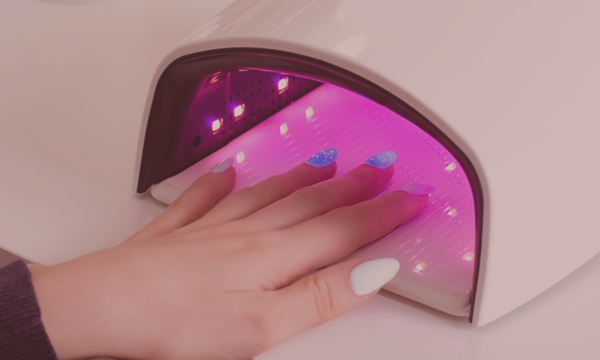
Semi-permanent nail polish: 7 ml or 10 ml? Find out which size to choose, how to work out the number of applications and how to make the most of your budget with LuluNails Belgium.
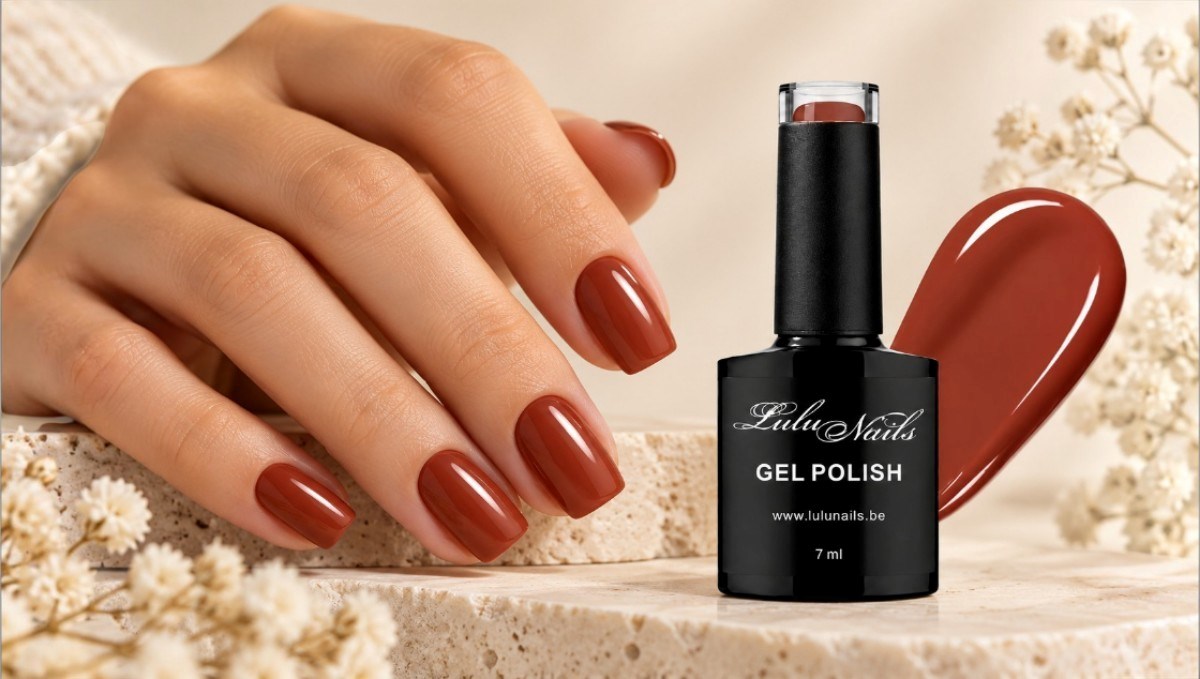
Semi-Permanent Nail Polish 7 ml or 10 ml: What’s the Difference and Which Size Should You Choose? | LuluNails Belgium
Are you looking to buy professional semi-permanent nail varnish, but can’t decide between a 7 ml bottle and a 10 ml bottle?
&At first glance, the difference seems simple: the 10 ml bottle contains more product.
But for a nail technician, a beginner or someone who does their own nails at home, the best size depends mainly on how it’s used.
Should you buy all your colours in large sizes?
Is a 7 ml bottle enough for salon work?
How many sets can you do with one bottle of Gel Polish?
And which size allows you to build a professional colour range without unnecessarily tying up your budget?
In this guide, LuluNails Belgium helps you choose between 7 ml Gel Polish and 10 ml Semi-Permanent Nail Polish depending on how often youuse, your favourite colours and your business.
7 ml or 10 ml: what’s the difference?
The main difference is, of course, the amount of product contained in the bottle.
Semi-Permanent Nail Polish 7 ml
More compact size.
It may be of particular interest for:
- trying out a new colour;
- building up a large colour palette;
- testing out a trend;
- buying several colours on a tight budget;
- doing your own nails;
- offering seasonal colours in the salon.
Semi-Permanent Nail Polish 10 ml
The 10 ml size contains more product.
It may be particularly suitable for:
- the most popular colours;
- regular professional use;
- salons;
- nail technicians;
- shades used all year round;
- classic colours.
The best choice is therefore not automatically the largest bottle.
You need to consider how often you’ll actually use the colour.
Why choose a 7 ml semi-permanent nail varnish?
A 7 ml bottle is particularly handy when you want to have a wide range of colours to choose from.
Imagine you’re putting together your first colour chart.
You want to offer:
- red;
- burgundy;
- nude;
- Milky;
- pink;
- chocolate;
- plum;
- midnight blue;
- green;
- pastel;
- Cat Eye.
Buying each shade straight away in a larger size can be quite a significant expense.
The 7 ml size therefore allows you to diversify your collection more quickly.
It is also particularly useful for seasonal colours.
For example:
Coral or pastel → spring/summer
Burgundy, chocolate, plum → autumn/winter
Nail art colours → more occasional use
In these situations, a small size can make perfect sense.
Why choose a 10 ml semi-permanent nail varnish?
The 10 ml size becomes particularlyinteresting when you know a colour is in regular demand.
In a salon, certain shades come up much more often than others.
For example:
- nude;
- Milky;
- classic red;
- white;
- natural pink;
- burgundy;
- colours used for French manicures.
If a colour is used several times a week, buying a larger size can prevent having to replace it too quickly.
For a professional, the strategy might therefore be:
essential colours → 10 ml
and
trendy / seasonal colours → 7 ml.
7 ml or 10 ml for a beginner?
When you’re just starting out, it’s generally not necessary to buy lots of large bottles.
It’s more useful to understand:
- nail preparation;
- Base Coat;
- application in thin layers;
- curing;
- top coat;
- removal.
To start with, you can choose a few versatile colours.
For example:
1. Nude
For natural looks.
2. Milky
For Clean Nails, French manicures and Baby Boomer styles.
3. Red
A timeless classic.
4. Burgundy
For a deeper shade.
5. Pink
For a soft manicure.
You can then expand your collection based on the colours you actually use.
LuluNails Semi-Permanent Nail Varnishes.
Which size should a nail technician choose?
A professional needs to think differently from someone who only does their own nails.
The aim is to have enough choice for clients without unnecessarily buying shades that will almost always remain unopened.
A useful strategy is to divide your colour chart into three categories.
The essentials
To be used regularly:
- red;
- nude;
- Milky;
- white;
- pink;
- burgundy.
These colours may warrant a larger size if your client frequently requests them.
Complementary colours
For example:
- blue ;
- green ;
- purple ;
- orange ;
- brown ;
- plum.
The size depends on your client’s request.
Trends
Cat Eye, seasonal effects, very specific shadescolours or nail art colours.
A small size allows you to test demand before ordering more.
How many applications can be done with one bottle of semi-permanent nail varnish?
There is no universal figure that applies to all bottles and all nail technicians.
The actual number depends, in particular, on:
- the length of the nails;
- their width;
- the number of coats;
- the amount applied;
- the texture of the product;
- product wastage;
- the technician’s technique.
Someone applying very thin layers will use less product than someone who overloads their brush.
This is why you should be wary of claims such as:
"one bottle is enough for exactly X applications".
The number can vary considerably.
How can you actually work out how many applications you get from a bottle?
The best method for a professional is very simple.
Step 1
Take a new bottle.
Step 2
Make a note of the date of first use.
Step 3
Make a note of every complete application carried out with that colour.
Step 4
When the product runs out, check how many applications you’ve managed.
You’ll then know your actual usage, based on your technique and your clientele.
This is far more useful than a general estimate.
Theoretical calculation to compare 7 ml and 10 ml
You can also use a simple formula:
Number of applications = bottle volume ÷ amount used per application
For example, just to illustrate the calculation:
If your technique used 0.10 ml per exposure:
7 ml would theoretically allow for approximately 70 exposures.
10 ml would theoretically allow for approximately 100 exposures.
If your consumption were 0.20 ml per application:
7 ml would theoretically correspond to approximately 35 applications.
10 ml would correspond to approximately 50 applications.
These figures are merely mathematical examples intended to illustrate the relationship between volume and consumption. They do not constitute a guarantee of the actual number of applications achievable with a LuluNails product.
How do you calculate the cost of the colour per application?
For a professional, it’s even more worthwhile.
Use:
Price of the bottle ÷ actual number of manicures carried out = cost of colour per manicure
Purely illustrative example:
If a bottle costs €9.90 and you actually carry out 50 applications with that bottle:
the cost per colour would be approximately €0.20 per application.
Of course, you must also factor in the other consumables:
- Base Coat;
- Top Coat;
- Nail Prep;
- Primer if necessary;
- Cleaner;
- files;
- consumables;
- electricity;
- equipment;
- working time.
However, this method already provides a better understanding of a colour’s cost-effectiveness.
Why does the number of coats affect consumption?
The number of coats directly influences the amount of product used.
Some shades can achieve the desired result with a light application.
Others may require a second coat to achieve greater intensity.
However, the correct method is not:
more coats = a better finish.
LuluNails recommends working with thin coats that have been properly cured.
An excessively thick coat may:
- run towards the cuticles;
- wrinkle;
- create unevenness;
- complicate the curing process.
How Many Coats of Semi-Permanent Nail Polish Should You Apply?
Why isn’t a larger bottle always better value?
A larger bottle might automatically seem better value.
But this is only true if you actually use the colour.
Imagine two products.
Colour A
Nude, used several times a week.
Colour B
Neon green, used only a few times a year.
A large bottle of Nude might make sense.
On the other hand, systematically buying a large size of every colour can tie up money in products that are rarely used.
For a salon, true profitability therefore lies in buying:
more of the colours that sell well
and
fewer of the colours that don’t sell well.
How can you build a professional colour chart without spending too much?
To start with, create colour families.
Nude and natural
- nude pink;
- beige;
- Milky;
- caramel.
Classics
- red;
- burgundy;
- white;
- black.
Seasons
- chocolate;
- plum;
- olive;
- midnight blue;
- pastel;
- coral.
Effects
- Cat Eye;
- glitter;
- pearlescent;
- metallic.
Start with a cohesive selection.
Then look at your customers’ actual requests.
If a colour becomes very popular, order it in the size that best suits your stock levels.
Which colours should you prioritise buying in 10 ml?
For a professional, the best choices are usually your own bestsellers.
Don’t choose based solely on an Instagram trend.
Look at your actual sales history.
If your customers regularly ask for:
- nude;
- Milky;
- red;
- burgundy;
- white;
these are the colours it may be worth keeping more stock of.
At LuluNails, the Nude, Milky, Red, Burgundy and Chocolate ranges are already among the colours regularly featured in our current collections and guides. LuluNails
Which colours should you buy in 7 ml?
The 7 ml size can be particularly useful for:
- trying out a new colour;
- quickly expanding your range of options;
- seasonal trends;
- nail art;
- very specific colours;
- Cat Eye;
- shades requested occasionally.
It therefore allows a nail techniciannail technician to offer a wider choice without necessarily having to purchase every product in the largest size.
7 ml for doing your own nails at home: is that enough?
For someone who only does their own nails, a small size can be very useful.
Asame colour is unlikely to be used every day.
This means you can buy several shades rather than keeping a very large quantity of a single shade.
For example:
Milky Nude Red Burgundy Chocolate
This alone allows for a huge variety of manicures.
Do you need to buy lots of colours to get started?
No.
This is a common mistake when starting out with nail art.
It’s more important to invest in a complete kit:
- a good UV/LED lamp;
- base coat;
- Top Coat;
- preparation;
- a few colours;
- files;
- essential accessories.
In its beginner’s equipment guide, LuluNails already recommends starting with the products that are actuallyrather than buying a huge number of items straight away. LuluNails
7 ml and 10 ml: is there a difference in quality?
The bottle’s volume is not an indicator of a semi-permanent nail polish’s quality.
When choosing a professional colour, look instead at:
- formulation;
- pigmentation;
- texture;
- application;
- UV/LED curing process;
- compatibility with your system;
- desired finish.
The size mainly corresponds to the quantity available.
How should you store your bottles correctly?
Regardless of the size, proper storage is important.
In particular, avoid:
- direct sunlight;
- immediate proximity to a switched-on UV/LED lamp;
- excessive heat;
- leaving the bottle open unnecessarily.
Close the bottle properly after use.
During a treatment, also avoid placing your bottles directly in front of your lamp.
LuluNails Semi-Permanent-Permanent LuluNails HEMA- and TPO-free
The relevant LuluNails ranges are available HEMA- and TPO-free.
LuluNails sells a range of colours and sizes designed for both professionals and nail enthusiasts.
However, the statement ‘free from HEMA and TPO’ does not mean:
- hypoallergenic;
- completely risk-free;
- that the product may come into contact with the skin.
With all UV/LED products:
- avoid contact between the uncured product and the skin;
- remove any excess product before curing;
- apply the appropriate number of coats;
- use a compatible lamp;
- follow the product instructions.
7 ml or 10 ml: comparison table
| Your needs | Size to consider |
|---|---|
| Trying a new colour | 7 ml |
| Doing your nails at home | 7 ml |
| Building a large colour chart | 7 ml |
| Seasonal colour | 7 ml |
| Colour requested occasionally | 7 ml |
| Colour in high demand in salons | 10 ml |
| Nude used every week | 10 ml |
| Classic professional red | 10 ml |
| Milky – in high demand | 10 ml |
| Regular professional stock | 10 ml |
This table is intended as a buying guide: your actual usage remains the best indicator.
FAQ – 7 ml or 10 ml semi-permanent nail varnish
What is the difference between a 7 ml and a 10 ml polish?
The main difference is the amount of product contained in the bottle. Which size you choose depends mainly on how often you use it.
Is the 7 ml size sufficient for a professional?
Yes, particularly for testing colours, developing a colour chart or keeping certain shades that are less in demand.
Why buy the 10 ml size?
The 10 ml size may be useful for colours used regularly, so that you have more product available.
How many applications can you get from 7 ml?
There is no exact figure that applies to all users. It depends, in particular, on the amount applied, the length of the nails and the number of coats.
How many applications can you do with 10 ml?
Again, actual usage varies. A professional can gauge this by keeping track of the number of treatments carried out using a full bottle.
Do two coats use up significantly more than one coat?
Yes, adding a coat increases usage. However, it is essential to follow the number of coats required for the colour and the procedure, rather than trying to save product by altering the technique.
Which size should you choose when starting out?
A small size generally allows you to test more colours whilst keeping costs under control.
Which colours should you buy in large sizes?
Prioritise the shades that your clients actually ask for most often.
Can 7 ml Gel Polish be used on Builder Gel?
Yes, provided the products are compatible and the nail has been properly prepared in accordance with the system’s protocol.
Does LuluNails offer a range of sizes?
LuluNails offers various Gel Polish / Semi-Permanent Nail Polish products, notably in 7 ml and 10 ml sizes, depending on the ranges available.
Certified Nail Training Courses in Liège
Buy semi-permanent nail varnish in Belgium
Are you looking for professional semi-permanent nail varnish in 7 ml or 10 ml sizes in Belgium?
Discover a wide selection of colours at LuluNails Belgium:
Nude – Milky – Pink – Red – Bordeaux – Chocolate – Plum – Blue – Green – Pastel – Cat Eye and many more.
Complete your manicure with:
Base Coat – Rubber Base – Builder Gel – Top Coat – Nail Prep – Primer – Cleaner – UV/LED lamps.