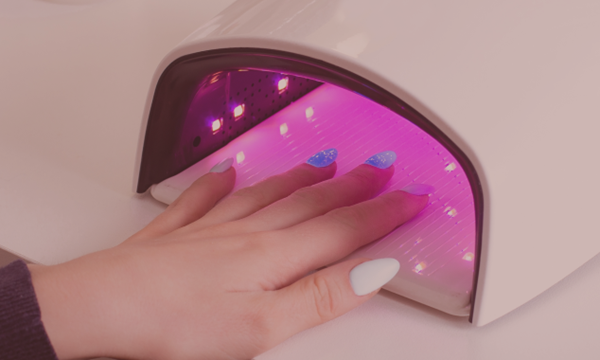
Are your nails splitting, breaking or becoming brittle? Find out why and how to choose the right rubber base or builder gel with LuluNails Belgium.
Splitting Nails: Why Do They Happen and How Can You Strengthen Them with a Rubber Base or Builder Gel?
Do your nails split at the tips, become thin, break easily or show several small layers that are separating?
This problem is common with natural nails. It can occurfollowing repeated contact with water, harsh daily activities, excessive filing or the improper removal of semi-permanent nail varnish.
How can you strengthen nails that are splitting? Can you apply semi-permanent nail varnish? Should you choose a Rubber Base or a Builder Gel?
In this guide, LuluNails Belgium, a Belgian brand specialising in professional nail products and training courses in Liège, explains the possible causes of splitting, the mistakes to avoid and the aesthetic solutions to consider.
1. Why do my nails split?
Nail splitting, sometimes known as lamellar onychoschizia, occurs when the surface layers of the nail plate separate, particularly at the free edge.
The following symptoms are then observed:
-
Nails that split into several layers.
-
Crumbling tips.
-
Thin or brittle natural nails.
-
Small cracks at the tips of the nails.
-
Difficulty in maintaining a certain length.
There may be several causes.
Repeated contact with water
Frequent exposure to alternating wet and dry conditions can weaken some nails.
People who wash their hands very often or regularly carry out household chores may be more at risk.
Over-aggressive filing
An unsuitable nail file or excessive filing can damage the free edge and exacerbate splitting.
Incorrect removal of gel or semi-permanent polish
Ripping off semi-permanent polish, peeling off a Rubber Base or forcing the removal of gel can strip away surface layers of the natural nail.
Mechanical damage
Opening packaging with your nails, scraping surfaces or using your nails as tools can lead to breakage and splitting.
Other possible causes
Skin conditions, certain nutritional deficiencies or other health problems can sometimes contribute to brittle nails.
Persistent, unusual splitting, or splitting associated with changes in colour, shape or pain, warrants medical advice.
2. Can semi-permanent nail varnish be applied to nails that are splitting?
Yes, in some cases, but not automatically.
Where the splitting is minor, limited to the free edge, and the nail plate remains sufficiently healthy, a cosmetic treatment may sometimes bebe considered.
However, if the nails are severely damaged, painful, detached from their nail bed or show any suspicious abnormalities, it is preferable not to cover them until the cause is known.
Semi-permanent nail varnish does not biologically repair the layers of a nail that has already split.
It primarily provides an aesthetic finish and, depending on the system used, temporary mechanical protection.
For some natural nails that require additional support, a suitable strengthening base coat may be beneficial.
3. Rubber Base or Builder Gel: which should you choose for brittle nails?
This is a key question when you want to improve the durability of a manicure.
Rubber Base and Builder Gel do not serve exactly the same purpose.
Rubber Base: strengthening a manicure on natural nails
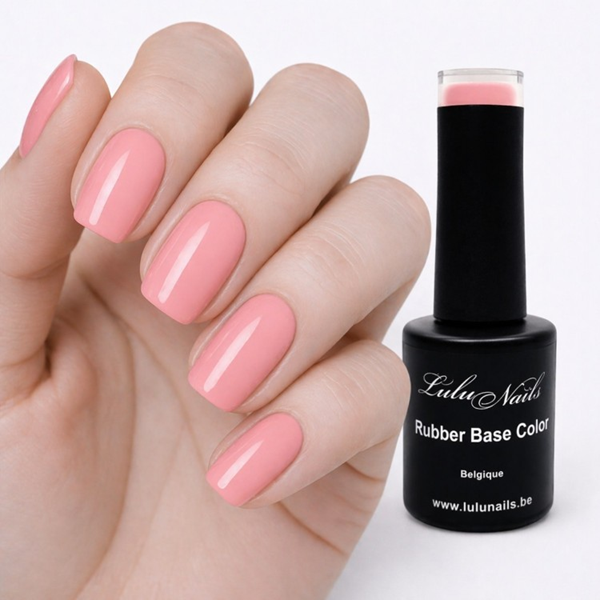
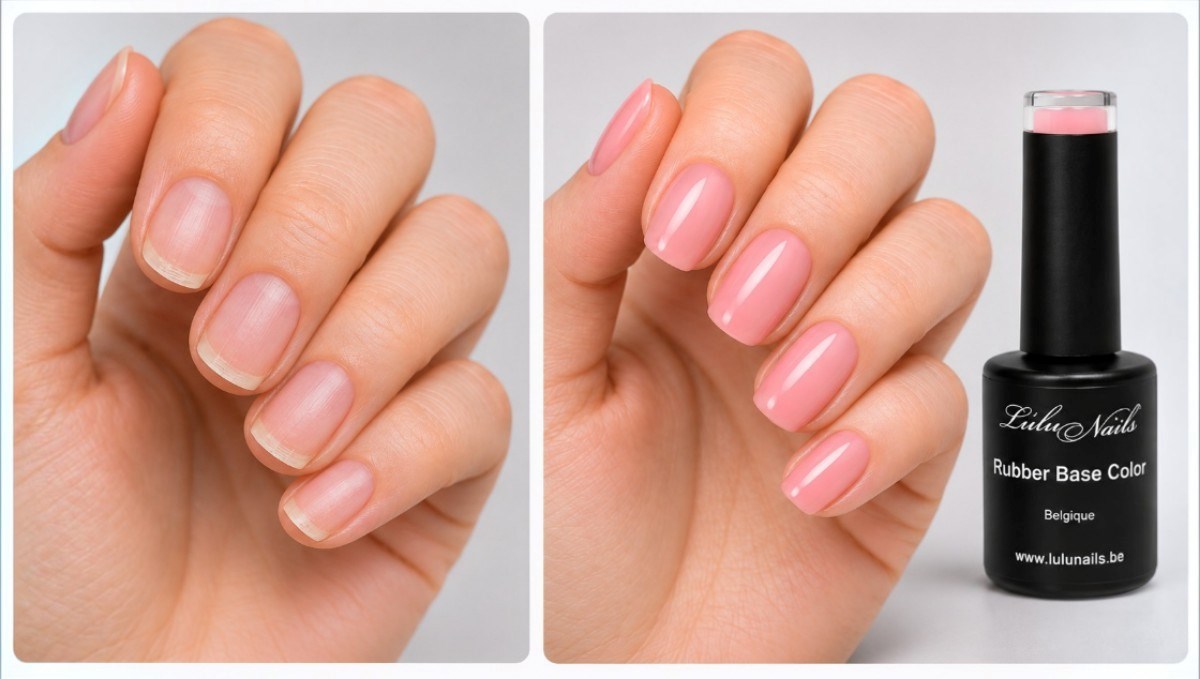
The LuluNails Rubber Base is a UV/LED base coat designed to enhance the appearance of the nails, depending on the product code and application method.
It may be suitable for:
-
Applying a manicure to natural nails.
-
Providing light reinforcement.
-
Smoothing out certain surface irregularities.
-
Acting as a base for a semi-permanent colour.
-
Creating a nude finish with a Rubber Base Colour.
A suitable Rubber Base can offer a degree of flexibility, which may be useful on soft natural nails.
However, a Rubber Base should not be used to conceal a severely damaged nail plate.
Flexible Builder Gel: creating a more structured build
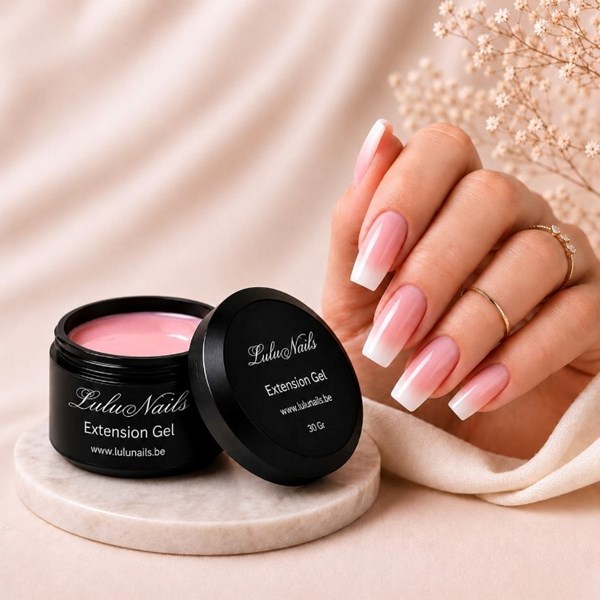
The LuluNails Flexible Builder Gel may be considered when you wish to create a build with greater structure, provided the nail is in a condition suitable for the treatment.
According to the product description, it allows you to:
-
To apply a build-up to natural nails.
-
To create a slight apex.
-
To improve the structure of a nail application.
-
To achieve a smoother surface.
-
To create a natural ‘Milky’ or ‘Nude’ finish.
Gel strengthening involves reinforcing the aesthetic structure of the nail without necessarily extending it.
It should not be confused with a medical treatment for the nail.
4. Comparison table: which solution should you choose?
| Situation | Solution to consider |
|---|---|
| Healthy but slightly flexible nail | Suitable Rubber Base |
| Natural nail requiring reinforcement | Flexible Builder Gel |
| Healthy nail with minor irregularities | Rubber Base Colour |
| Healthy nail requiring no reinforcement | Semi-permanent Base Coat |
| Very damaged or painful nail | Postpone the application and seek appropriate advice |
| Nail showing a suspicious abnormality | Medical assessment before application |
LuluNails advice: your choice should not be based solely on the desire for stronger nails. You should also consider thecondition of the natural nail plate, its flexibility, length and any damage.
5. How can you prevent your nails from splitting further?
Step 1: trim the brittle tips
When a free edge starts to split, trimming the length slightly can help prevent further splitting.
Use a suitable nail file and avoid pulling on the loose layers.
&Step 2: file gently
Do not try to remove ridges by filing the entire surface of the nail too vigorously.
The aim is to preserve as much of the natural thickness as possible.
Step 3: moisturise regularly
Cuticle oil and hand cream can help to care for your skin and nails.
Apply them regularly, particularly after washing and in the evening.
LuluNails cuticle oil can be incorporated into your skincare routine.
Step 4: protect your hands
Wear suitable gloves for prolonged household chores.
Avoid repeated contact with irritants and detergents as much as possible.
Step 5: Avoid peeling off UV/LED products
A semi-permanent manicure that is starting to lift must not bebe torn off.
Proper removal helps to prevent further damage to the natural nail plate.
Step 6: choose a reasonable length
On brittle nails, a shorter length may be easier to maintain.
A long extension creates greater mechanical stress, especially when the natural nail bed is already weakened.
6. How do you apply a strengthening treatment to natural nails?
A professional nail wrap can be considered after checking the condition of the nails.
Here are the main steps for a treatment using a suitable UV/LED product.
1. Examine the natural nail
Check for any lesions, inflammation, pain or suspicious issues.
2. Gently prepare the cuticles
Remove only the dead tissue adhering to the nail plate, without damaging the skin.
3. Prepare the surface according to the protocol
Avoid aggressive filing and preserve the thickness of the natural nail plate.
4. Dust off
The surface must be clean before application.
5. Apply the specified preparation products
Use Nail Prep, Primer or Base Coat only when required by the protocol for the chosen system.
6. Build the nail
Apply a suitable Rubber Base or Flexible Builder Gel without touching the skin.
7. Cure properly
Follow the curing time and use a compatible UV/LED lamp as specified by the manufacturer.
8. Finish the manicure
Apply the colour or Top Coat depending on the desired result.
A professional application must be carried out using the appropriate equipment and a good understanding of the products.
7. Why do my nails split after removing semi-permanent polish?
After removal, some people find that their natural nail plate is thinner or uneven.
This may be due to:
-
Ripping off the product.
-
Excessive scraping.
-
Excessive filing.
-
Aggressive preparation during successive applications.
-
Damage already present before the treatment.
Semi-permanent nail varnish is therefore not necessarily the sole cause of the problem
The application method and, above all, the removal method also play a role.
Important: once the natural nail has lost several layers, neither a Rubber Base nor a Builder Gel can immediately restore its natural structure.
The damaged part must gradually grow out and be replaced by healthy new growth.
8. Can a Rubber Base Colour be used without adding nail varnish?
A LuluNails Rubber Base Colour can, depending on the application method, be used as a tinted base for a natural manicure.
The nude, pink and Milky shades are particularly popular for achieving a subtle look.
This option may be useful when you wish to avoid applying multiple layers of colour.
However, you must follow the instructions for the product you are using, particularly regarding the finish and curing.
9. How long does it take for natural nails to return to a better condition?
Fingernails grow gradually.
It can take several months for a nail to fully regrow, often around four to six months, although this varies from person to person.
The time taken depends, in particular, on the rate of growth, the extent of the damage and its cause.
A cosmetic treatment can improve the appearance or temporarily protect the surface, but it does not necessarily speed up biological renewal.
If the problem persists despite gentle care and appropriate protection, consult a healthcare professional.
10. Which LuluNails products should you choose?
At LuluNails Belgium, you can discover several product ranges designed for different manicure techniques.
LuluNails Rubber Base
For UV/LED applications that require a strengthening base coat suited to the natural nail.
LuluNails Rubber Base Colour
To combine a tinted base with a natural finish, depending on the system chosen.
LuluNails Flexible Builder Gel
For wrapping and light-build techniques where these are suitable for the condition of the nail.
LuluNails Base Coat
To prepare the nail for the application of semi-permanent polish in accordance with the system’s recommendations.
LuluNails Cuticle Oil
For regular cuticle and nail care.
LuluNails UV/LED Lamps
To ensure the curing of compatible products in accordance with their technical protocol.
Discover professional products on LuluNails.be
11. HEMA- and TPO-free products: what does this mean?
LuluNails, a Belgian brand based in Liège, offers ranges of nail products formulated without HEMA or TPO.
These characteristics relate to the formulation of the products.
They do not mean that a product is hypoallergenic or that it is automatically suitable for all sensitive nails.
UV/LED products must be used correctly, without coming into contact with the skin, ensuring full curing and using a compatible lamp.
Anyone who has previously experienced a reaction to nail products should seek appropriate medical advice before further exposure.
Splitting nails
Why do my nails split at the tips?
Possible causes include repeated contact with water, mechanical damage, excessive filing and certain nail conditions.
Can a Rubber Base be applied to a split nail?
It depends on the condition of the nail plate. A Rubber Base may be suitable for certain healthy nails that need strengthening, but it does not repair layers that have already separated.
Which gel should I use to strengthen natural nails?
A suitable Flexible Builder Gel can be used to create a coating. The technique should be chosen according to the condition, length and flexibility of the nail.
Does semi-permanent nail varnish damage the nails?
Incorrect preparation, tearing off the polish or aggressive removal can damage the natural nail plate. Correct application and removal are essential.
What should you do if your nails split after a gel manicure?
Avoid tearing off the damaged layers, gently trim the tips, moisturise regularly and identify the cause of the damage. If the problem is serious, seek medical advice.
Does Rubber Base make nails stronger?
It can provide mechanical reinforcement when applied correctly, but does not alter the biological structure of the nail.
Rubber Base or Builder Gel for thin nails?
A Rubber Base may be suitable for light reinforcement, whilst a Builder Gel can create a more structured build. If the nail plate is abnormally thin or damaged, its condition must first be assessed.
Can gel be applied to very damaged nails?
It is not recommended to automatically apply extensions to very damaged nails. The cause must be identified and it must be checked that the treatment is appropriate.
Should you let your nails breathe?
Nails do not ‘breathe’ in the same way as skin. However, temporarily stopping nail extensions can be helpful when a nail plate is weakened, particularly to prevent further damage whilst it regrows.
Where can you buy a Rubber Base or Builder Gel in Belgium?
At LuluNails.be, you can discover LuluNails’ Rubber Bases, Builder Gels, semi-permanent nail polishes and professional accessories, with delivery to Belgium.
Conclusion: how can you achieve a beautiful manicure on brittle nails?
When a nail splits, the priority is to identify the cause and avoid any further damage.
A good maintenance routine, gentle filing, proper removal and suitable protection can all help to preserve natural nails.
For a beauty treatment carried outon nails in good condition, a Rubber Base or a Flexible Builder Gel can provide the necessary reinforcement for the manicure.
LuluNails Belgium supports nail enthusiasts and nail technicians with professional nail products, technical advice and training courses in Liège.
Discover our products and training courses at LuluNails.be
LuluNails – A Belgian brand offering nail products, UV/LED gels, semi-permanent nail varnishes and professional training courses in Liège.